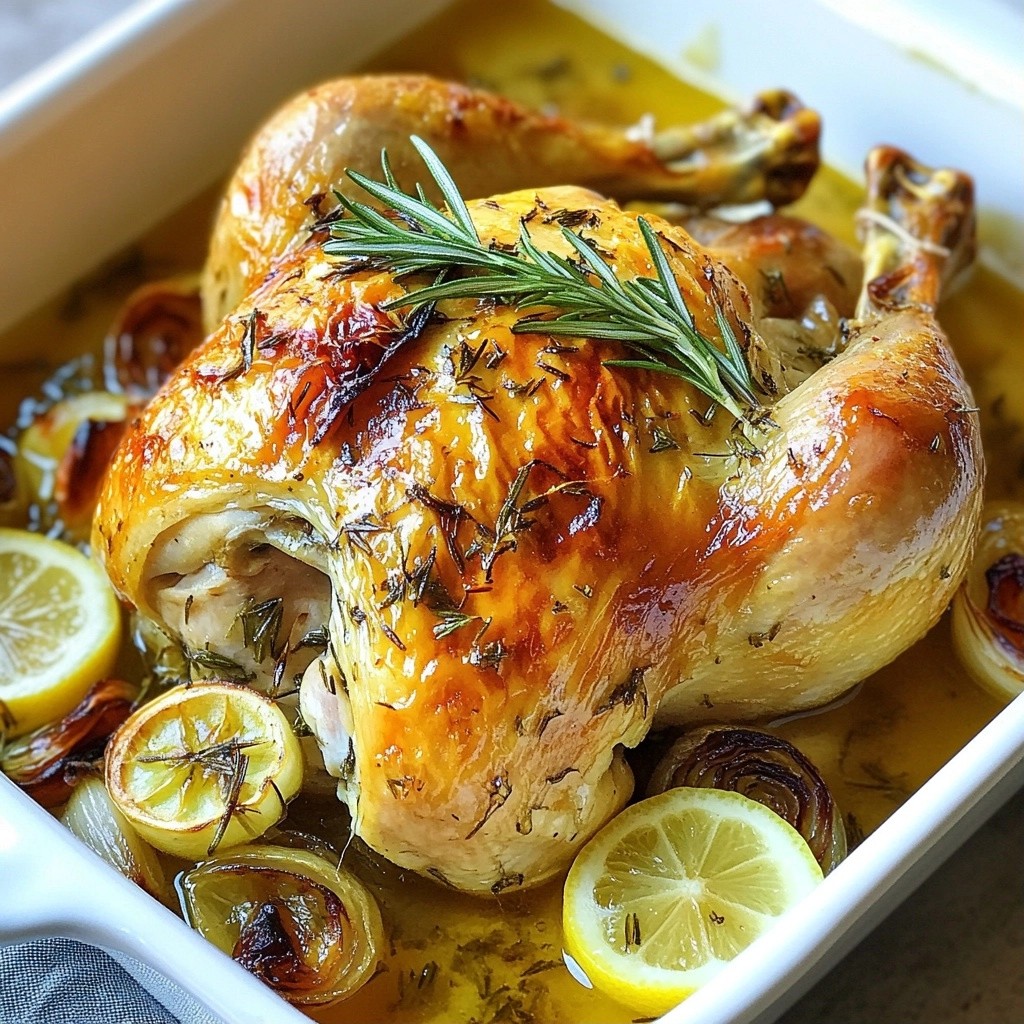
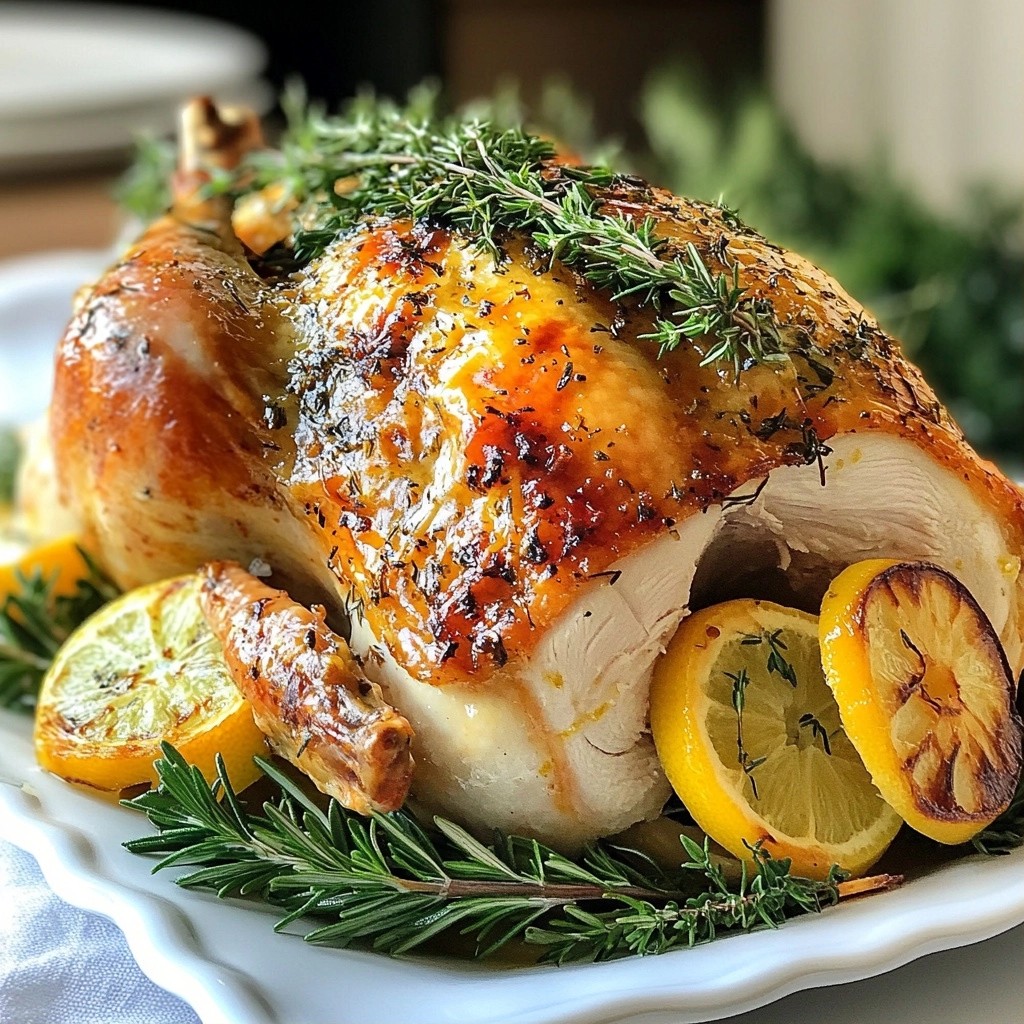
Are you ready to impress your guests this Christmas? My juicy Lemon Herb Roasted Turkey is the star of any holiday feast. With fresh herbs and a zesty twist, this dish is packed with flavor. Follow my step-by-step guide to create a turkey that’s crispy on the outside and moist on the inside. Let’s dive into this delicious recipe that will make your holiday dinner unforgettable!
Why I Love This Recipe
- Festive Flavor: This turkey is infused with bright lemon and fresh herbs, making it a perfect centerpiece for your holiday table.
- Juicy and Tender: The herb butter and chicken broth keep the turkey moist and flavorful, ensuring every bite is succulent.
- Easy to Prepare: With simple steps and minimal ingredients, this recipe is accessible for cooks of all skill levels.
- Impressive Presentation: The golden-brown skin and garnished herbs create a stunning display that will wow your guests.
Ingredients
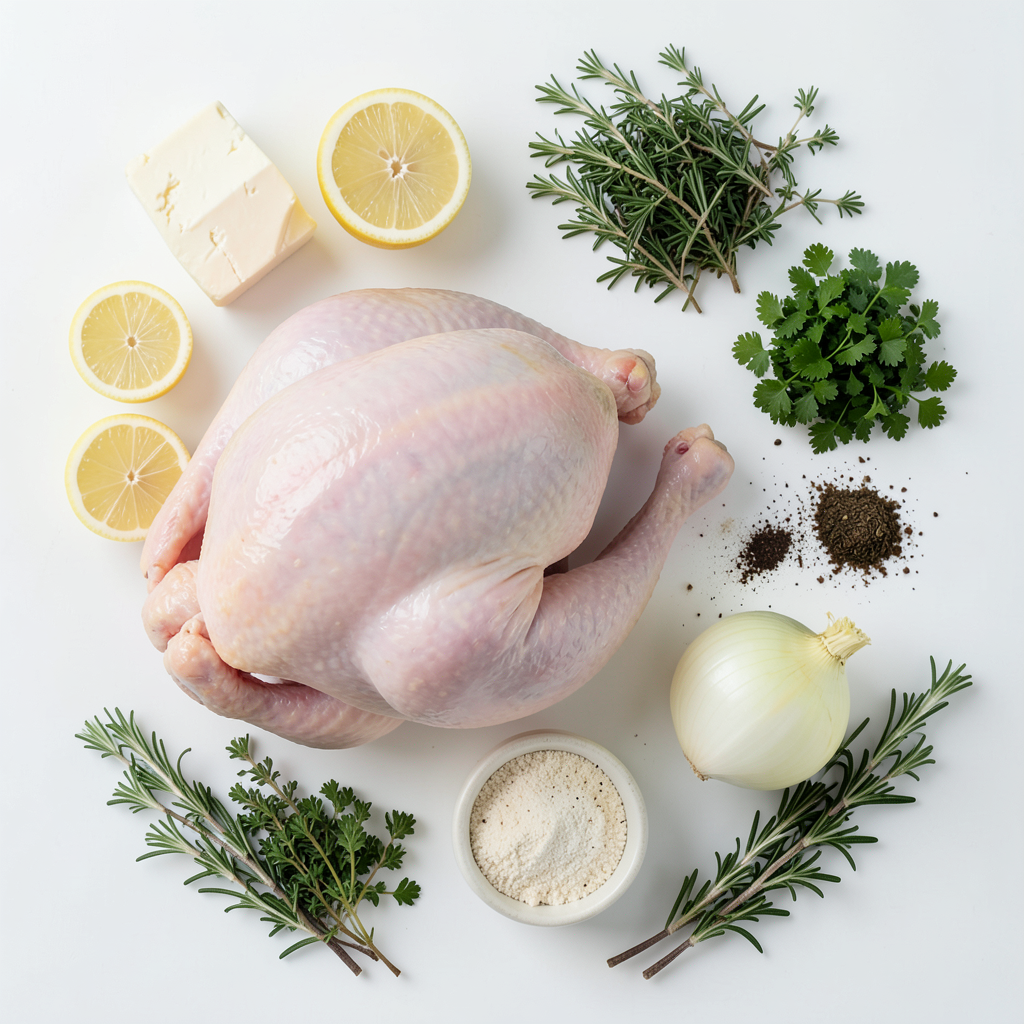
List of Ingredients
- 1 (12-14 lb) whole turkey, thawed
- 1/2 cup unsalted butter, softened
- 2 lemons, zested and juiced
- 1 tablespoon fresh rosemary, finely chopped
- 1 tablespoon fresh thyme, finely chopped
- 1 tablespoon fresh parsley, finely chopped
- 1 tablespoon garlic, minced
- 1 tablespoon onion powder
- Salt and pepper to taste
- 1 large onion, quartered
- 4 cups low-sodium chicken broth
- Fresh herbs sprigs (rosemary, thyme) for garnish
Importance of Fresh Herbs
Fresh herbs bring life to your turkey. They add flavor and aroma. Rosemary, thyme, and parsley are key players. Their bright notes enhance the lemon. Fresh herbs also help to keep the meat moist. Dried herbs can’t match their impact. When you use fresh herbs, you elevate the dish. It becomes more festive and delicious.
Recommended Turkey Size
For a family feast, a 12-14 lb turkey works well. This size serves 10 to 12 people. It provides enough meat for all. If you have a larger gathering, consider a turkey over 14 lbs. A bigger turkey may take longer to cook, so plan ahead. Always check the internal temperature. It should reach 165°F in the thickest part of the thigh.
Step-by-Step Instructions
Prepping the Oven and Turkey
First, preheat your oven to 325°F (165°C). This temperature helps cook the turkey evenly. Next, take your turkey and remove the giblets from the cavity. Pat the turkey dry with paper towels to make the skin crispy.
Making the Herb Butter
In a mixing bowl, combine the softened butter, lemon juice, lemon zest, rosemary, thyme, parsley, minced garlic, onion powder, salt, and pepper. Mix these ingredients until they blend well. This herb butter adds rich flavor to your turkey.
Rub and Stuff the Turkey
Gently separate the skin from the turkey breast using your fingers. Be cautious not to tear it. Spread half of the herb butter under the skin, ensuring it coats the meat well. Then, rub the rest of the butter on the outside of the turkey. In the cavity, place the quartered onion and any remaining herbs for extra taste.
Roasting Process
Place the turkey in a roasting pan, breast side up. Pour the chicken broth into the bottom of the pan. This keeps the turkey moist while it roasts. Cover the turkey loosely with aluminum foil and roast it for about 2 hours.
After 2 hours, take off the foil and baste the turkey with the juices in the pan. Continue roasting for another 1 to 1.5 hours, or until the thickest part of the thigh reaches 165°F (75°C).
Resting and Serving
Once the turkey is done, remove it from the oven. Let it rest for 20 to 30 minutes before carving. This helps keep the juices inside the meat. Finally, carve the turkey and place it on a serving platter. Add fresh herb sprigs for a festive touch. Enjoy your delicious meal!
Tips & Tricks
Achieving Crispy Skin
To get that perfect crispy skin on your turkey, start with a dry bird. Pat the turkey dry with paper towels. This step is key. Next, use the herb butter mix generously all over the turkey. The butter helps create a golden, crispy layer while it cooks. Lastly, roast at the right temperature, 325°F (165°C). This slow cooking allows the skin to crisp up nicely.
How to Baste Properly
Basting is important for a juicy turkey. After roasting for two hours, take off the foil. Use a ladle to scoop out the pan juices. Drizzle these juices over the turkey. This adds flavor and keeps it moist. Do this every 30 minutes for best results. Remember, the more you baste, the more tasty the skin and meat become.
Checking for Doneness
To know when your turkey is ready, use a meat thermometer. Insert it into the thickest part of the thigh. The temperature should reach 165°F (75°C). If you don’t have a thermometer, check the juices. If they run clear, the turkey is done. Always let the turkey rest for 20-30 minutes before carving. This helps keep all the juicy goodness inside.
Pro Tips
- Choose the Right Turkey: Opt for a fresh or properly thawed turkey to ensure even cooking and the best flavor.
- Let it Rest: Allowing the turkey to rest after cooking is essential for juicy meat; it redistributes the juices for better flavor.
- Basting for Moisture: Basting the turkey every 30 minutes after removing the foil helps keep the skin crispy and the meat moist.
- Use a Meat Thermometer: For perfect doneness, always use a meat thermometer to check that the thickest part of the thigh reaches 165°F (75°C).
Variations
Herb Variations for Different Flavors
You can change the herbs for new tastes. Instead of rosemary, use sage for a warm note. Oregano brings a Mediterranean flair, while dill adds a fresh touch. Mix and match any herbs you like. A blend of parsley, basil, and chives gives a garden taste. This keeps your turkey exciting every time you make it.
Citrus Add-ins or Alternatives
Lemon shines in this recipe, but other citrus fruits work too. Try limes for a zesty kick or oranges for sweetness. You can use grapefruit for a bold flavor. Mixing citrus juices can create a unique blend. Just remember to balance the flavors, so it doesn’t get too sour or sweet.
Stuffing Options for the Turkey
Stuffing adds moisture and flavor. You can use traditional bread stuffing with herbs and spices. For a twist, try wild rice and mushrooms. Quinoa with nuts and dried fruits offers a healthy option. You can even skip stuffing and just add aromatics like onion and garlic in the cavity. This keeps the turkey juicy and flavorful.
Storage Info
Storing Leftovers Safely
After your meal, let the turkey cool down. Wrap leftovers tightly in plastic wrap or foil. Place them in a shallow container. This helps the turkey stay fresh. Store it in the fridge for up to four days. Always label your containers with the date. This way, you won’t forget when you cooked it.
Reheating Methods for Juicy Turkey
When you are ready to enjoy leftovers, don't just microwave them. Instead, use the oven for the best taste. Preheat your oven to 325°F. Place the turkey in a baking dish. Add a little chicken broth to keep it moist. Cover the dish with foil. Heat for about 25-30 minutes. Check that it is warm all the way through.
Freezing Guidelines
If you have more turkey than you can eat, freezing is a great option. Cut the turkey into smaller pieces first. Place the pieces in freezer bags. Squeeze out any air before sealing. Label each bag with the date. Frozen turkey can last up to three months. When you are ready to eat, thaw it in the fridge overnight before reheating.
FAQs
How long to roast a turkey per pound?
Roast your turkey for about 13-15 minutes per pound. For a 12-14 pound turkey, this means around 2.5 to 3.5 hours of cooking time. Always check the thickest part of the thigh for an internal temperature of 165°F. This ensures your turkey is safe to eat and juicy.
Can I prepare the turkey in advance?
Yes, you can prep your turkey a day ahead. Season it with the herb butter and cover it. Store it in the fridge overnight. This allows the flavors to soak in. Just remember to let it sit at room temperature for 30 minutes before roasting.
What to serve with lemon herb roasted turkey?
Pair your turkey with classic sides. Mashed potatoes, green beans, and cranberry sauce are great choices. Stuffing and roasted vegetables also complement the turkey well. Don’t forget a fresh salad for a nice crunch!
How to make turkey gravy from drippings?
To make gravy, start with the drippings from your roasting pan. Pour them into a saucepan and add a bit of chicken broth. Whisk in flour or cornstarch to thicken it. Cook until it bubbles and thickens. Season with salt and pepper to taste. Enjoy this rich flavor over your turkey!
This guide covers all you need for a perfect turkey meal. You learned about key ingredients like fresh herbs and the right turkey size. I shared step-by-step instructions for prepping, roasting, and resting your turkey. We explored tips for crispy skin and delicious variations for flavor. Finally, I provided storage tips to keep leftovers safe. With these insights, you can impress everyone at the table. Enjoy your cooking adventure!