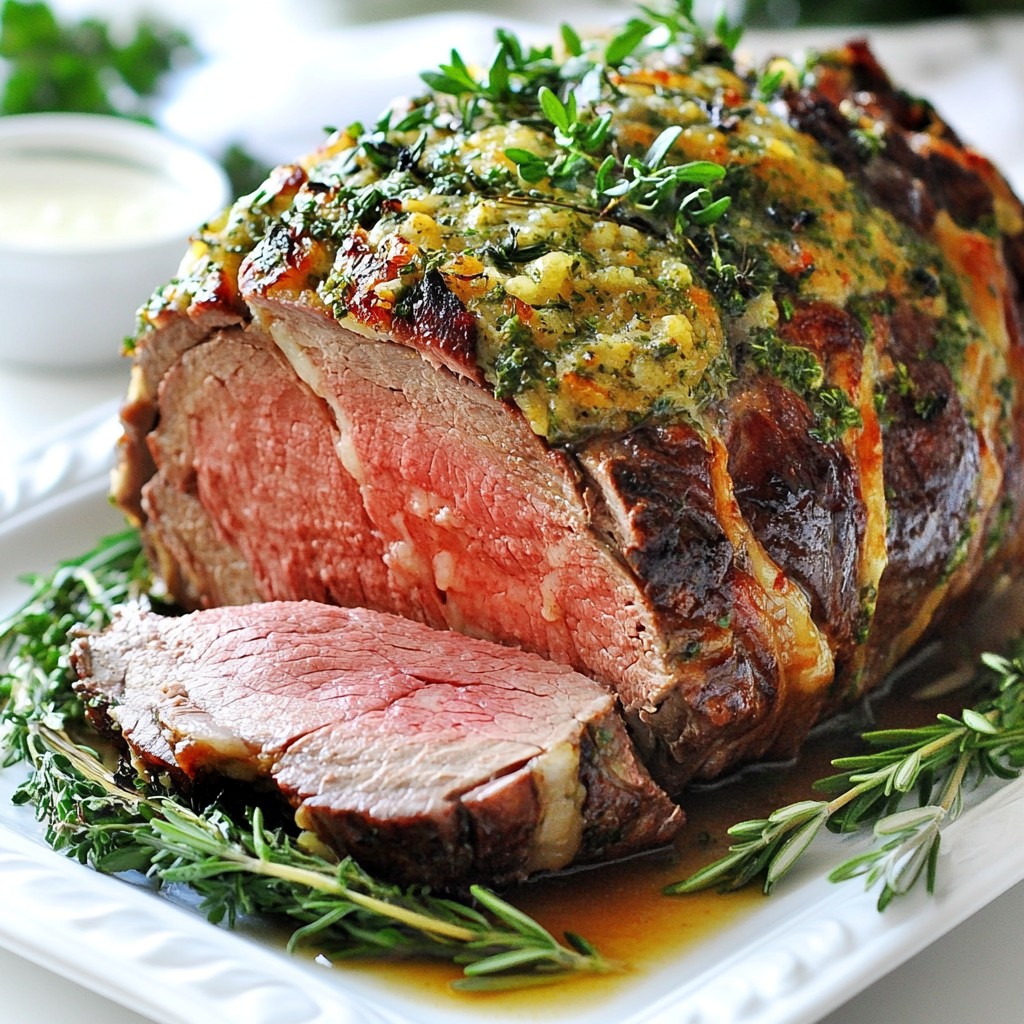
Get ready to impress your guests with a Juicy Christmas Herb-Crusted Prime Rib Roast! This recipe takes the classic holiday centerpiece to a whole new level. I’ll guide you through each step, from choosing the freshest herbs to perfect roasting techniques. With my handy tips and tricks, you’ll achieve that mouth-watering flavor and tender texture. Let’s start this festive feast together and make your holiday dinner unforgettable!
Why I Love This Recipe
- Flavorful Herb Crust: The combination of fresh herbs and spices creates a delicious crust that enhances the natural flavors of the prime rib, making every bite irresistible.
- Perfect for Celebrations: This prime rib roast is an impressive centerpiece for festive occasions, ensuring your holiday gatherings are memorable and delicious.
- Juicy and Tender: The slow roasting method keeps the meat juicy and tender, ensuring a melt-in-your-mouth experience that will delight your guests.
- Customizable Seasoning: Feel free to adjust the herbs and spices to your liking, making this recipe versatile and perfect for your personal taste preferences.
Ingredients
List of Required Ingredients
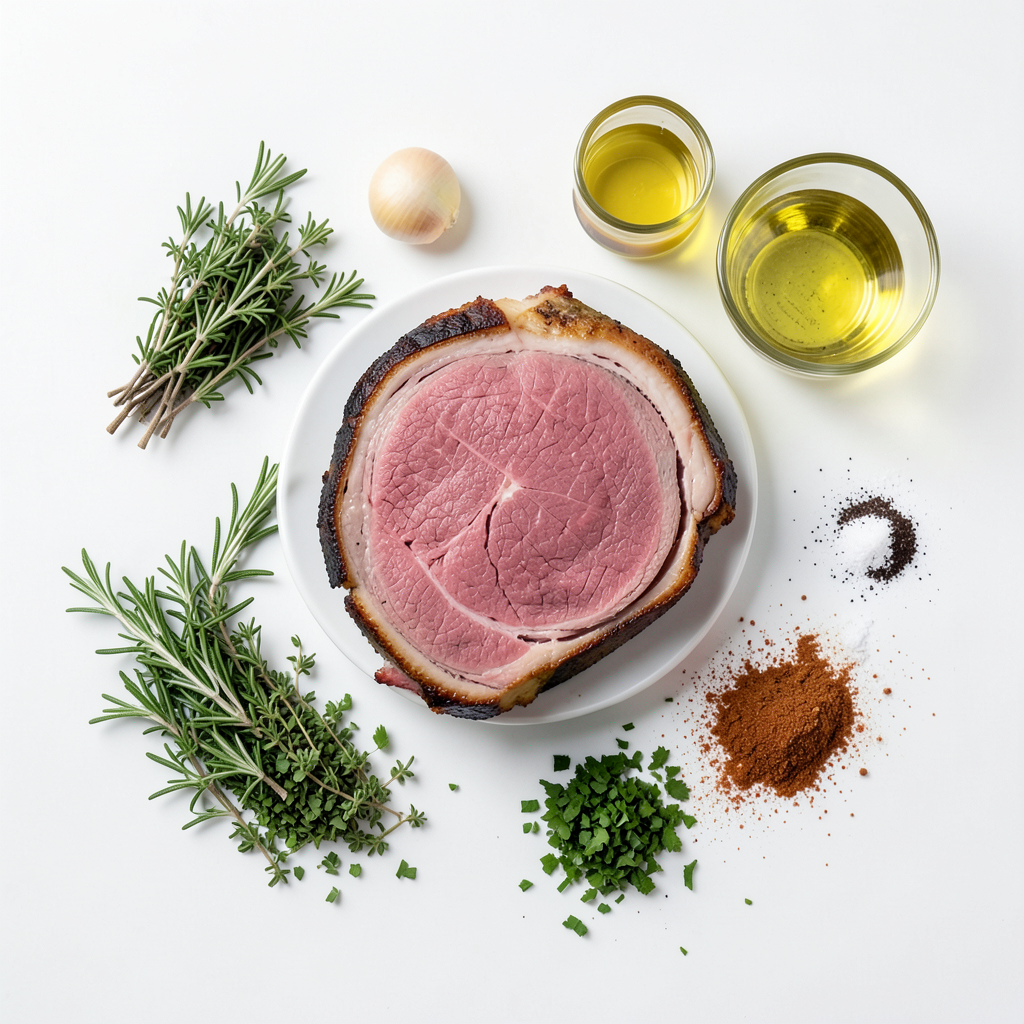
To make a juicy Christmas herb-crusted prime rib roast, gather these ingredients:
- 1 (5 to 6 pounds) bone-in prime rib roast
- 4 cloves garlic, minced
- 2 tablespoons fresh rosemary, chopped
- 2 tablespoons fresh thyme, chopped
- 2 tablespoons fresh parsley, chopped
- 2 tablespoons Dijon mustard
- 2 tablespoons olive oil
- 1 tablespoon kosher salt
- 1 tablespoon black pepper
- 1 teaspoon onion powder
- 1 teaspoon smoked paprika
Substitutions and Alternatives
You can easily swap ingredients! If you lack fresh herbs, use dried ones. Use 1 teaspoon of dried herbs for every tablespoon of fresh herbs. Need a different mustard? Try whole grain or spicy brown mustard. If you want a different fat, use melted butter instead of olive oil. These swaps can still give you a tasty roast.
Importance of Fresh Herbs
Fresh herbs make this dish special. They add bright flavors that dry herbs can't match. Rosemary gives a woodsy taste. Thyme adds warmth. Parsley brings a fresh note. Using fresh herbs enhances the roast's aroma and flavor, making your meal feel festive and delicious. Plus, they look great on the finished dish!
Step-by-Step Instructions
Preparing the Prime Rib
Start by taking the prime rib out of the fridge. Let it sit for about 2-3 hours. This helps the meat reach room temperature. Room temperature meat cooks more evenly.
Making the Herb Paste
In a bowl, mix the following ingredients:
- 4 cloves garlic, minced
- 2 tablespoons fresh rosemary, chopped
- 2 tablespoons fresh thyme, chopped
- 2 tablespoons fresh parsley, chopped
- 2 tablespoons Dijon mustard
- 2 tablespoons olive oil
- 1 tablespoon kosher salt
- 1 tablespoon black pepper
- 1 teaspoon onion powder
- 1 teaspoon smoked paprika
Stir these ingredients until they form a smooth paste. This herb paste adds great flavor.
Roasting Process and Temperature Adjustments
Preheat your oven to 450°F (232°C). While the oven heats, rub the herb paste all over the prime rib. Make sure to coat all sides, especially the ends and bone side.
Place the seasoned roast on a rack in a roasting pan, bone side down. Roast it for 15 minutes at the high temperature. This gives the roast a nice crust.
After 15 minutes, lower the oven temperature to 325°F (163°C). Continue to roast until the internal temperature is right. Aim for 125°F for medium-rare or 135°F for medium. This may take about 1.5 to 2 hours.
Once done, take the roast out of the oven and cover it loosely with aluminum foil. Let it rest for 20-30 minutes. Resting helps the juices stay in the meat. Now, you can slice it against the grain and serve!
Tips & Tricks
How to Achieve a Juicy Roast
To get a juicy roast, start by bringing the prime rib to room temperature. This step helps the meat cook evenly. Next, use a good herb paste to coat the roast. The paste holds moisture and adds great flavor. During cooking, keep an eye on the internal temperature. Aim for 125°F for medium-rare. After cooking, let the roast rest for 20-30 minutes. This resting time allows the juices to settle back into the meat.
Best Tools for Slicing
For slicing, use a sharp knife. A carving knife works best for making clean cuts. Ensure your knife is sharp to avoid tearing the meat. A cutting board with a groove can catch juices while slicing. This makes serving easier and cleaner. If you have a meat thermometer, use it to check the roast's doneness before slicing. It is key to serving perfectly cooked pieces.
Flavor Enhancements and Additional Seasonings
You can add more flavor by using different herbs. Try using sage or thyme for a unique taste. Adding a splash of red wine to the roasting pan can deepen the flavor. If you like some heat, consider adding crushed red pepper to the herb paste. Experiment with different spices like cumin or coriander for a twist. Always taste your paste before applying it to the roast. Adjust the seasonings to your liking for the best results.
Pro Tips
- Resting is Key: Allowing the prime rib to rest after cooking is essential for juicy meat. This helps the juices redistribute throughout the roast, ensuring every slice is flavorful.
- Use a Meat Thermometer: To achieve perfect doneness, use a meat thermometer. This ensures your roast reaches the desired temperature without overcooking.
- Flavor Boost: For an extra flavor boost, consider marinating the roast overnight with the herb paste. This deepens the flavors and enhances the overall taste.
- Don't Skip the Bone: Cooking the prime rib bone-in not only adds flavor but also helps retain moisture during the roasting process. The bone acts as an insulator.
Variations
Cooking Styles (Grilling vs Oven Roasting)
You can cook prime rib in two main ways: grilling or oven roasting. Grilling gives a nice smoky flavor. It works best with a grill that has a lid. Start by searing the roast over high heat, then move it to a cooler part of the grill. This method helps keep the meat juicy. Oven roasting is more common. It cooks evenly and allows for a crispy crust. Both methods can deliver a great meal.
Alternative Herb Combinations
While rosemary and thyme are classic choices, you can mix it up! Try using fresh oregano or sage for a different taste. You can also add some herbs like tarragon or dill to brighten up the flavor. Experiment based on what you have at home. Each herb adds a unique twist to your prime rib roast.
Gluten-Free and Low-Sodium Options
This recipe is naturally gluten-free, which is great! If you want to lower the salt, you can reduce the kosher salt amount. Use low-sodium mustard as a great swap for Dijon. You can also add more herbs to boost flavor without the salt. These small changes can make your prime rib healthier without losing taste.
Storage Info
Storing Leftovers
After a festive meal, you may have leftover prime rib. The best way to store it is in an airtight container. This keeps the meat fresh for several days. Make sure to let the roast cool to room temperature before sealing it. Place it in the fridge if you plan to eat it within three days.
Reheating Techniques
When you're ready to enjoy the leftovers, take care when reheating. I recommend using the oven for the best results. Preheat your oven to 300°F (150°C). Place the slices on a baking sheet. Cover them with foil to keep them moist. Heat for about 15-20 minutes. You can also use a microwave, but it may dry out the meat. If using a microwave, heat in short bursts. Check often to avoid overcooking.
Freezing Prime Rib
If you want to save some for later, freezing is a great option. Wrap the prime rib tightly in plastic wrap, then in aluminum foil. This helps prevent freezer burn. Label the package with the date. You can freeze it for up to three months. To thaw, move it to the fridge overnight. This keeps the meat tender and juicy when you reheat.
FAQs
What temperature should prime rib be cooked to?
Cook prime rib to a minimum of 125°F for medium-rare. This will give you a juicy and tender roast. For medium, aim for 135°F. Use a meat thermometer for accuracy. Insert it into the thickest part of the meat. This ensures even cooking throughout.
How long should I let the roast rest?
Let your roast rest for 20 to 30 minutes after cooking. This step is key for juicy meat. The resting time allows the juices to settle. If you cut too soon, the juices will run out. Cover it loosely with aluminum foil during this time.
Can I prepare the herb crust in advance?
Yes, you can make the herb crust ahead of time. Mix the herbs and spices a day before. Store the paste in the fridge until you’re ready to use it. This saves time on the cook day and allows flavors to meld. Just remember to bring it to room temperature before applying it to the roast.
To make a perfect prime rib, we explored key ingredients, cooking steps, and helpful tips. Fresh herbs enhance flavor, while various cooking styles give options for everyone's taste. Remember to store leftovers properly and ask questions about cooking temps or resting time if needed. Cooking prime rib can be simple and fun with the right approach. Enjoy the process and savor every bite of your delicious creation.