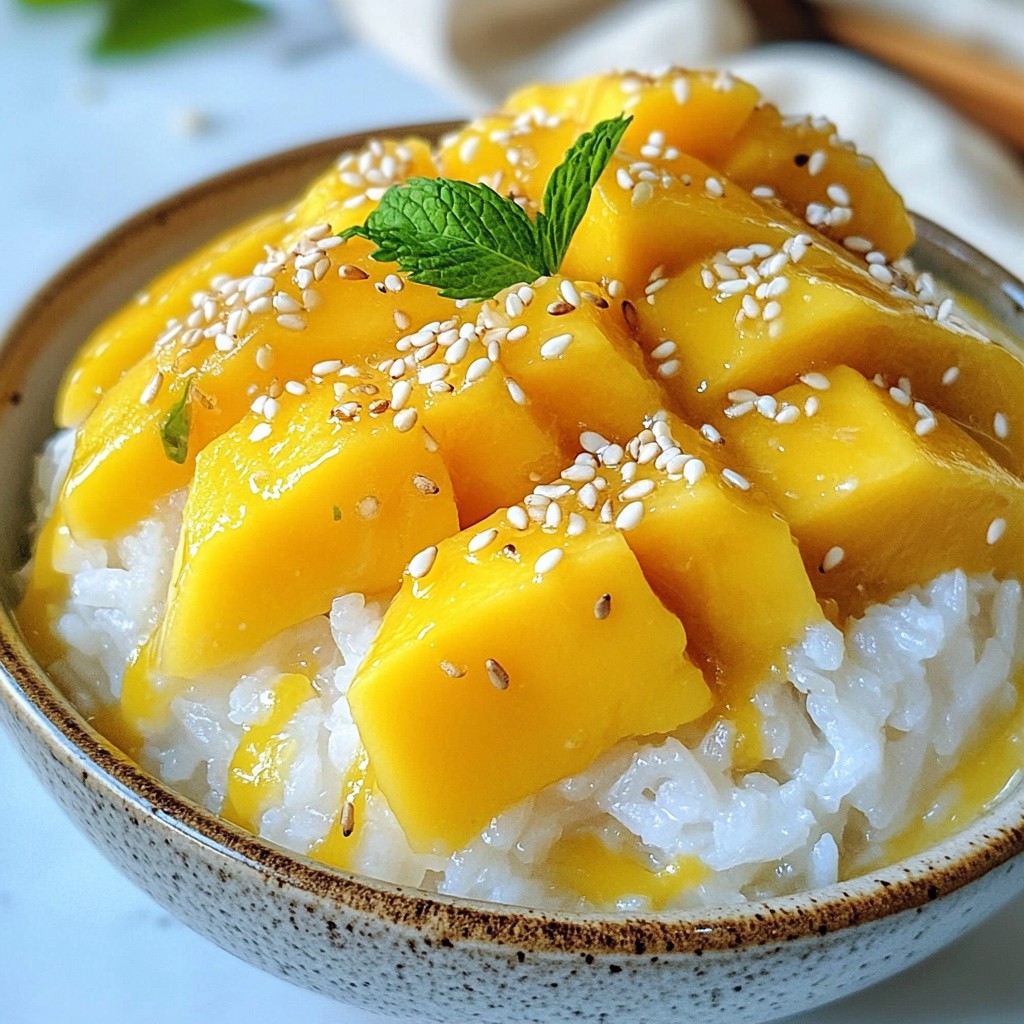
If you're ready to embark on a mouthwatering journey, let’s talk about Thai mango sticky rice. This delightful dish combines sweet mango slices with creamy coconut sticky rice, creating a perfect balance of flavors. Whether you're serving it at a party or enjoying it solo, you'll love making this easy treat. Follow along as I guide you through the simple steps to create the ultimate Thai dessert.
Why I Love This Recipe
- Deliciously Sweet: This Thai dessert perfectly balances the sweetness of ripe mangoes with the rich, creamy coconut sauce, making each bite a tropical delight.
- Easy to Make: With simple ingredients and straightforward steps, this recipe is accessible for both novice and experienced cooks looking to impress.
- Perfect for Any Occasion: This dish is versatile enough to be served at casual gatherings, special celebrations, or even as a comforting treat at home.
- Visually Stunning: The vibrant colors of the mango and the glossy coconut sauce create an appealing presentation that is sure to wow your guests.
Ingredients
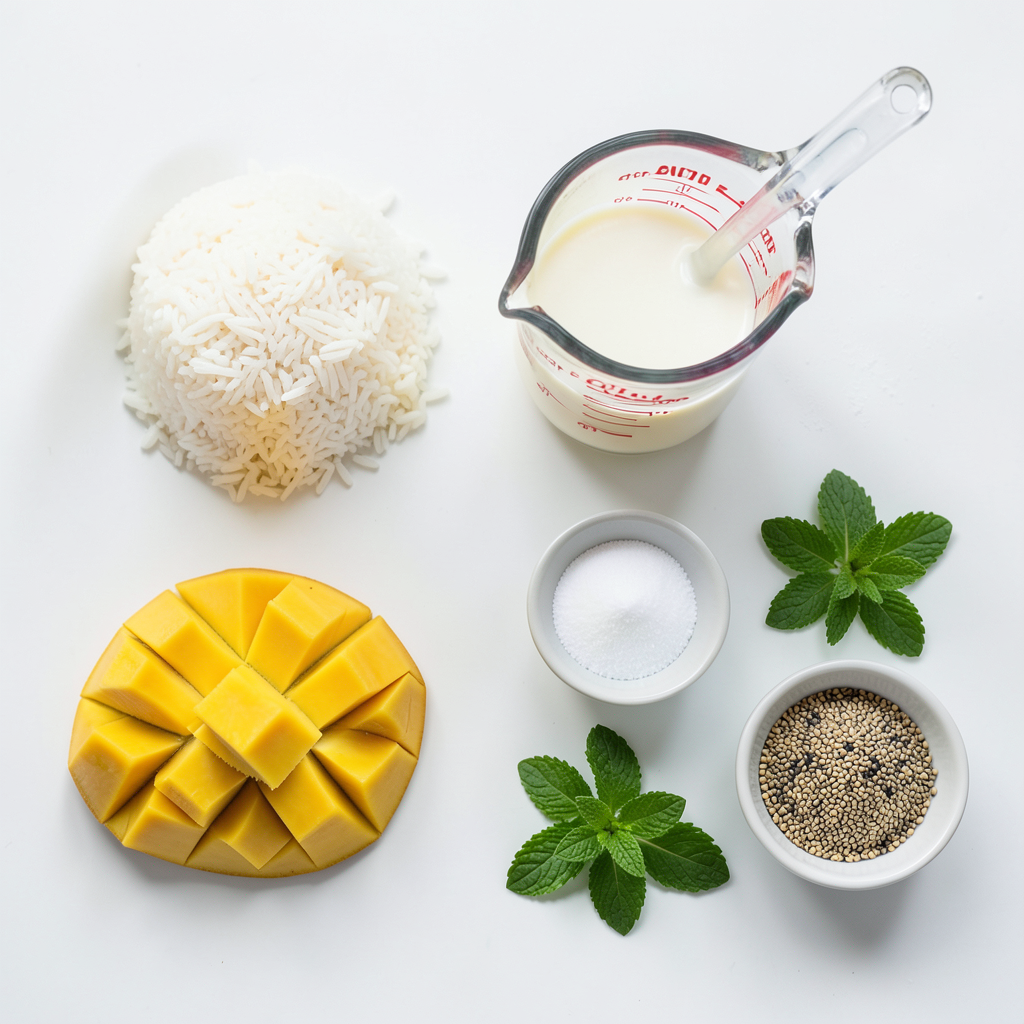
List of Key Ingredients
- Glutinous rice (1 cup)
- Coconut milk (1 ½ cups)
- Sugar (½ cup)
- Salt (¼ teaspoon)
- Ripe mangoes (2)
- Optional garnishes: sesame seeds or mung beans, fresh mint leaves
For this Thai Mango Sticky Rice, you need glutinous rice. This type of rice is sticky and sweet. It makes the dish special. You will also need coconut milk. This adds creaminess and flavor.
Next, sugar sweetens the coconut milk. A little salt helps balance the sweetness. You should use ripe mangoes. They need to be sweet and juicy for the best taste.
If you want to make it even better, add sesame seeds or mung beans on top. Fresh mint leaves add color and a nice taste.
Gather these ingredients before you start cooking. They are key to creating a delightful flavor experience.
Step-by-Step Instructions
Preparing the Rice
First, rinse the glutinous rice under cold water. Keep rinsing until the water runs clear. This step removes excess starch. Next, soak the rice in water for at least 4 hours or overnight. Soaking makes the rice sticky and tender. After soaking, drain the rice well before cooking.
Steaming the Rice
Use a traditional steamer or a bamboo steamer. Line the steamer basket with cheesecloth to prevent sticking. Place the soaked rice in the basket. Steam over boiling water for about 30 to 40 minutes. Check the rice to ensure it becomes sticky and fully cooked.
Making the Coconut Sauce
While the rice steams, make the coconut sauce. Pour 1 ½ cups of coconut milk into a saucepan. Add ½ cup sugar and ¼ teaspoon salt. Cook over medium heat, stirring until the sugar dissolves. Remember, do not let the mixture boil. Reserve ½ cup of this sauce to drizzle later.
Combining Rice and Coconut Sauce
Once the rice is cooked, move it to a mixing bowl. Pour the remaining coconut sauce over the hot rice. Gently mix until the rice is well coated. Let it sit for about 15 minutes. This allows the rice to soak up all the flavors.
Preparing the Mango
While the rice absorbs the sauce, slice the ripe mangoes. Peel the mangoes, then cut them into thin wedges. Aim for even pieces to make the dish look nice.
Serving the Dish
To plate, mold a portion of the sticky rice using a small bowl or cup. Carefully place the molded rice on a serving plate. Next, arrange the mango slices beside or on top of the rice. Drizzle the reserved coconut sauce over the mango and rice. For added crunch, sprinkle sesame seeds or mung beans on top. Fresh mint leaves make a lovely garnish too.
Tips & Tricks
Achieving the Perfect Sticky Rice
To make the best sticky rice, start by soaking it. Soak glutinous rice for at least 4 hours. For the best results, soak it overnight. This helps the rice absorb water and become soft. When ready, drain the rice.
Use a traditional steamer or bamboo steamer for cooking. Line the steamer with cheesecloth for easy removal. Steam the rice over boiling water for 30 to 40 minutes. Check for doneness by tasting a few grains. The rice should be sticky and tender.
For the perfect texture, do not rush the soaking and steaming. These steps are key to getting that delightful stickiness.
Flavor Enhancements
To boost the flavor, consider adding pandan leaves. They give a lovely aroma and a touch of green color. Simply tie a few leaves in a knot and add them to the steaming rice.
Adjust sweetness to match your taste. Start with half a cup of sugar in the coconut sauce. Taste the sauce before mixing it with the rice. Add more sugar if you prefer it sweeter.
Balancing the sweetness makes each bite more enjoyable.
Presentation Tips
Plating is an art, and it adds to the eating experience. Use a small bowl or cup to mold the sticky rice. This gives it a nice shape on the plate.
Arrange mango slices artfully next to the rice. You can fan them out for a beautiful look. Drizzle reserved coconut sauce over the dish for extra flavor.
For garnishing, sprinkle sesame seeds or mung beans on top. Fresh mint leaves add a pop of color and freshness. These little touches make your dish even more appealing.
Pro Tips
- Soaking the Rice: Soaking the glutinous rice for at least 4 hours or overnight helps achieve the perfect sticky texture. The longer the soak, the better the results.
- Steaming Technique: Make sure to steam the rice in a bamboo or traditional steamer for an authentic texture. Avoid boiling the rice to maintain its unique stickiness.
- Coconut Sauce Consistency: For a creamier sauce, use full-fat coconut milk. Ensure you stir continuously while heating to prevent the sauce from separating.
- Perfect Mango Selection: Choose ripe mangoes that yield slightly to pressure for the best sweetness and flavor. Avoid overripe mangoes that may be too soft and mushy.
Variations
Dietary Adjustments
You can enjoy Thai mango sticky rice while meeting dietary needs. This dish is already vegan, as it uses coconut milk and no animal products. If you want a gluten-free option, you’re in luck! Glutinous rice is naturally gluten-free.
For those who want to cut sugar, use natural sweeteners like honey or agave. You can also try using stevia or monk fruit. These alternatives add sweetness without the extra calories.
Flavor Variations
To make your sticky rice even better, add fruit toppings. Blueberries or dragon fruit make great additions. They add color and flavor. You can also infuse your coconut sauce. A bit of vanilla or lime juice can brighten the dish. This small change makes a big difference in taste.
Alternative Serving Methods
Why not try something new? You can layer mango sticky rice in parfaits for a fun twist. Just alternate layers of rice, mango, and coconut sauce in a glass.
Another idea is to serve it with ice cream. The creamy texture of ice cream pairs well with the sticky rice and mango. It adds a cool touch and makes for a delightful dessert.
Storage Info
Storing Leftovers
After enjoying Thai mango sticky rice, store any leftovers in the fridge. Use an airtight container to keep the rice and mango fresh. Try to separate the rice from the mango to avoid sogginess. The rice will stay good for about 3 days. The mango can also last for 2 days in the fridge if stored properly.
Reheating Instructions
To reheat sticky rice, you can use a steamer. Place the rice in the steamer for about 5 to 10 minutes. This helps keep the rice soft and sticky. If you don’t have a steamer, use the microwave. Place the rice in a bowl with a splash of water. Cover it and heat for 30 seconds. Stir and check if it’s warm. Repeat as needed.
Freezing Options
You can freeze sticky rice for later use. Place cooled rice in a freezer bag. Squeeze out the air and seal it tightly. The rice can stay in the freezer for about 1 month. Mango does not freeze well, so it’s better to enjoy it fresh. When you want to eat the rice, let it thaw in the fridge overnight before reheating.
FAQs
What is the main difference between glutinous rice and regular rice?
Glutinous rice is stickier than regular rice. It has a high starch content, which helps it clump together. You often use it for desserts, like Thai mango sticky rice. Regular rice, like jasmine or basmati, is fluffier and less sticky. Each type has its own uses in cooking.
Can I use canned coconut milk?
Yes, you can use canned coconut milk. Just make sure it's full-fat for the best flavor. Some brands add preservatives that can alter the taste. Always check the label for quality. Fresh coconut milk is great, but canned is a good alternative.
How long can mango sticky rice be stored?
Mango sticky rice can be stored for up to 2 days in the fridge. Keep it in an airtight container to maintain freshness. The rice can dry out, so try to eat it soon after making it for the best taste.
Is Thai Mango Sticky Rice gluten-free?
Yes, Thai mango sticky rice is gluten-free. Glutinous rice has no gluten. Also, the other ingredients, like coconut milk and mango, are gluten-free. This makes it a great option for those with gluten sensitivities.
What should I do if my rice is too hard or too soft?
If the rice is too hard, it may not have soaked long enough. Soak it for at least 4 hours next time. If it’s too soft, you might have added too much water. Adjust the water amount in future batches for the right texture.
You learned how to make mango sticky rice using simple ingredients and steps. We covered choosing glutinous rice, preparing it, and making a creamy coconut sauce. You also got tips for flavor, presentation, and storage. Remember, minor tweaks can change the flavors and textures. Whether you keep it classic or experiment, mango sticky rice is always a fun dish. Enjoy creating your own version and impressing friends and family!