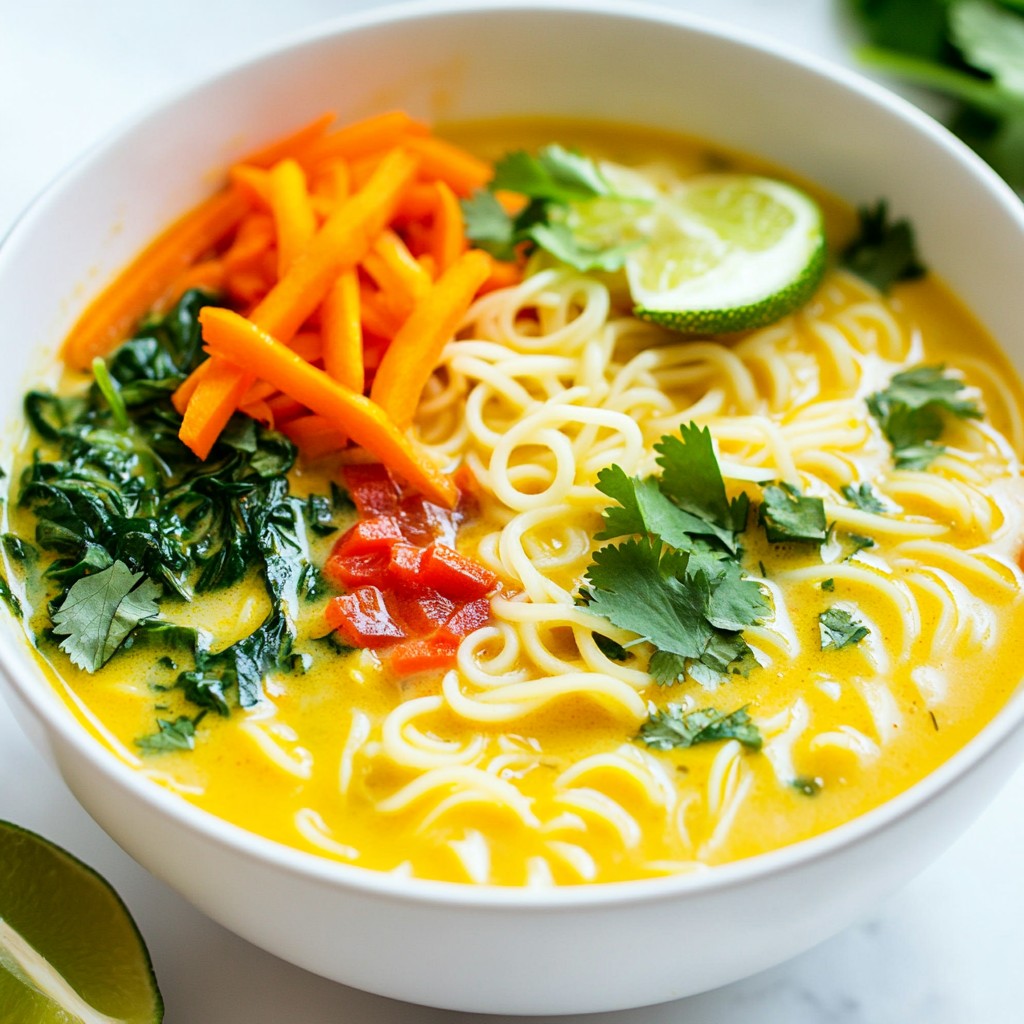
Ready to spice up your dinner routine? My Thai Coconut Curry Ramen is a delicious twist on traditional ramen. With a creamy coconut broth and bold flavors, this dish is a feast for your taste buds. Whether you're a ramen lover or a curious cook, you'll love how quick and easy it is to make. Join me as I guide you through each step to create this flavorful meal that everyone will enjoy!
Why I Love This Recipe
- Quick and Easy: This recipe comes together in just 30 minutes, making it perfect for busy weeknights.
- Rich and Creamy: The coconut milk adds a luxurious creaminess that pairs beautifully with the spices.
- Customizable: You can easily swap in your favorite vegetables or proteins to make it your own.
- Healthy and Flavorful: Packed with fresh veggies and bold flavors, this dish is as nutritious as it is delicious.
Ingredients
Essential Ingredients for Thai Coconut Curry Ramen
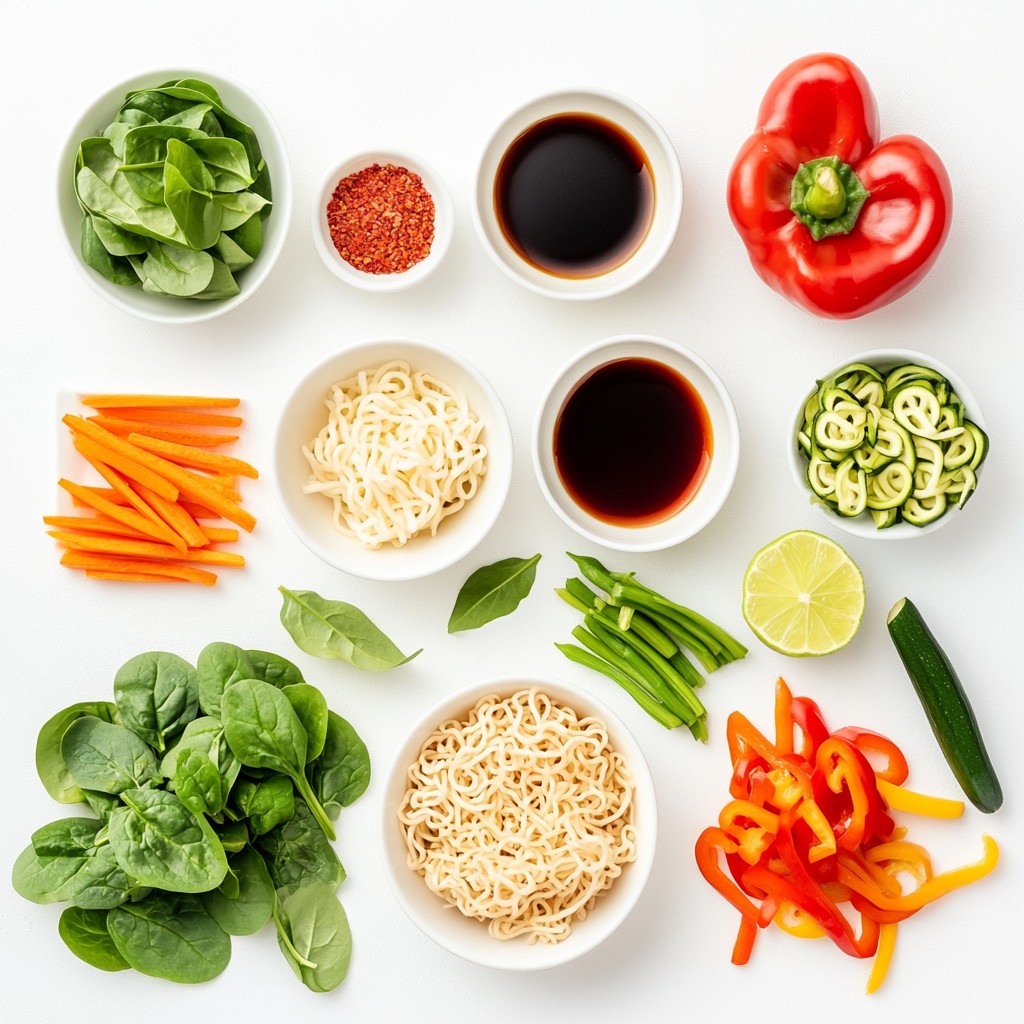
To make Thai coconut curry ramen, you need these key items:
- 200g ramen noodles
- 400ml coconut milk
- 1 tablespoon red curry paste
- 2 cups vegetable broth
- 1 tablespoon soy sauce
- 1 tablespoon lime juice
- 1 teaspoon brown sugar
- 1 cup fresh spinach
- 1 carrot, julienned
- 1 bell pepper, sliced
- 1 small zucchini, spiralized
- Fresh cilantro, for garnish
- Lime wedges, for serving
These ingredients create a rich and creamy broth that makes this dish shine.
Optional Ingredients for Added Flavor
You can add more flavor with these optional items:
- Chopped green onions
- A pinch of chili flakes
- Sliced mushrooms
- Peas or snap peas
These extras can enhance your dish and make it more colorful.
Common Substitutions
If you don’t have an ingredient, here are some easy swaps:
- Use chicken or beef broth instead of vegetable broth.
- Swap soy sauce for tamari for a gluten-free option.
- Replace coconut milk with almond milk for a lighter version.
- Try other vegetables like bok choy or broccoli instead of zucchini.
These substitutions keep the dish tasty and adaptable.
Step-by-Step Instructions
Cooking the Ramen Noodles
First, cook the ramen noodles. Follow the package instructions closely. This usually takes about 3-4 minutes. Once done, drain the noodles and set them aside. Make sure they don’t stick together.
Preparing the Coconut Curry Broth
Next, grab a large pot and heat it over medium heat. Add one tablespoon of red curry paste. Sauté the paste for about one minute. You want it to smell great! Then, pour in 400ml of coconut milk and 2 cups of vegetable broth. Stir well to mix everything. Let it simmer for 5 minutes. This helps the flavors blend nicely.
Adding Vegetables and Seasoning
Now, it's time to add flavor. Stir in one tablespoon of soy sauce, one tablespoon of lime juice, and one teaspoon of brown sugar. Mix it all together. Then, add in the vegetables: one cup of fresh spinach, one julienned carrot, one sliced bell pepper, and one spiralized zucchini. Cook this for 3-4 minutes. The veggies should be tender but still bright!
Combining All Ingredients
Finally, add the cooked ramen noodles to the pot. Gently stir in the noodles. Then, toss in the fresh spinach. Cook until the spinach wilts and everything is warm. Take a moment to taste the broth. If you want more flavor, add extra soy sauce or lime juice. Serve hot in bowls. Garnish with fresh cilantro and lime wedges. Enjoy your tasty Thai Coconut Curry Ramen!
Tips & Tricks
Perfecting the Flavor Balance
To create the best Thai coconut curry ramen, focus on the flavors. Start with red curry paste. It adds a warm, rich taste. When you sauté it, the aroma fills the kitchen. Next, the coconut milk brings creaminess, while vegetable broth adds depth. Mix these well. For a bright finish, add lime juice. It cuts through the richness and wakes up the dish. Taste your broth and adjust as needed. If it feels flat, try more soy sauce or a pinch of sugar.
Adjusting Spice Levels
Spice can make or break your ramen. If you love heat, add more red curry paste. A little goes a long way. For less spice, start with a small amount. You can always add more later. If you make the broth too spicy, a splash of coconut milk can help cool it down. Remember, balance is key. You want to enjoy the flavors without being overwhelmed.
Presentation Tips
A good-looking dish makes food more fun to eat. When serving, use large bowls to showcase the colorful veggies. Top each bowl with fresh cilantro. It adds a pop of green and fresh flavor. Lime wedges on the side invite diners to squeeze juice over their ramen. This adds brightness and looks great. Keep the colors bright and vibrant for a beautiful meal. Enjoy your creation!
Pro Tips
- Use Fresh Ingredients: Fresh vegetables and herbs enhance the flavor of your curry, so opt for the freshest produce available.
- Adjust Spice Level: If you prefer a spicier dish, consider adding extra red curry paste or a sprinkle of chili flakes before serving.
- Experiment with Proteins: Feel free to add tofu, chicken, or shrimp for a heartier meal that complements the curry flavors.
- Serve with a Side: This dish pairs wonderfully with a side of jasmine rice or a simple cucumber salad for a refreshing contrast.
Variations
Protein Additions (Tofu, Chicken, Shrimp)
You can add protein to your Thai coconut curry ramen in many ways. Tofu is a great choice. It soaks up the curry flavor well. Just cube firm tofu and sauté it in the pot before adding the broth. Chicken works too. Use bite-sized pieces and cook until no longer pink. Shrimp is another tasty option. Add them to the pot just before the noodles. They cook fast, so watch them closely. Each protein brings its own flavor and texture, making the dish even more enjoyable.
Vegetarian and Vegan Options
If you want a vegetarian or vegan version, use vegetable broth and tofu. The coconut milk keeps it creamy and rich. You can add more veggies for extra flavor. Try mushrooms, bok choy, or snap peas. All these options keep your ramen light and fun. Make sure to check that your red curry paste is vegan. Some brands use shrimp paste, which you want to avoid.
Gluten-Free Adjustments
For a gluten-free meal, swap out regular ramen noodles for rice noodles. They have a similar texture and taste great in the broth. Also, use tamari instead of soy sauce. Tamari is gluten-free and adds a nice umami flavor. Always check labels to ensure all your ingredients are gluten-free. This way, everyone can enjoy your delicious ramen!
Storage Info
How to Store Leftovers
After you enjoy your Thai Coconut Curry Ramen, let the leftovers cool. Place them in an airtight container. This keeps the flavors fresh and prevents spills. Store the container in the fridge. Leftovers stay good for about 3 days.
Reheating Instructions
To reheat, pour the ramen into a pot. Add a splash of water or broth to keep it moist. Heat over medium heat. Stir gently to warm it up evenly. You can also use the microwave. Heat in short bursts, stirring in between. This keeps the noodles from getting too soft.
Freezing the Dish
You can freeze the ramen for later meals. First, let it cool completely. Then, place it in a freezer-safe container. Make sure to leave some space for expansion. It can stay in the freezer for about 2 months. When you’re ready to eat, thaw it overnight in the fridge before reheating.
FAQs
Can I make Thai Coconut Curry Ramen ahead of time?
Yes, you can prepare this dish ahead of time. Cook the ramen noodles and store them separately. You can make the coconut curry broth and vegetables ahead too. When ready to eat, reheat the broth and add the noodles. This keeps the noodles from getting soggy.
What are some side dishes that pair well with this ramen?
Many side dishes go well with Thai coconut curry ramen. Here are some great options:
- Thai spring rolls
- Crispy vegetable tempura
- Fresh cucumber salad
- Steamed edamame
- Thai mango salad
These sides add texture and flavor to your meal.
How can I adjust the recipe for different dietary restrictions?
Adjusting the recipe is easy! For gluten-free, use gluten-free ramen noodles. For vegan, make sure your red curry paste has no animal products. You can swap the soy sauce with tamari for a gluten-free option. If you want less spice, use less red curry paste.
Thai Coconut Curry Ramen is a fun dish to make. We explored key ingredients, from the essential flavors to tasty substitutes. You learned how to cook the noodles and prepare a rich broth. I shared tips on balancing flavors and adjusting spice. You can customize this dish with proteins and store it easily.
Enjoy this recipe for a warm meal. It’s packed with options for everyone. Dive into the joy of cooking and make it your own.