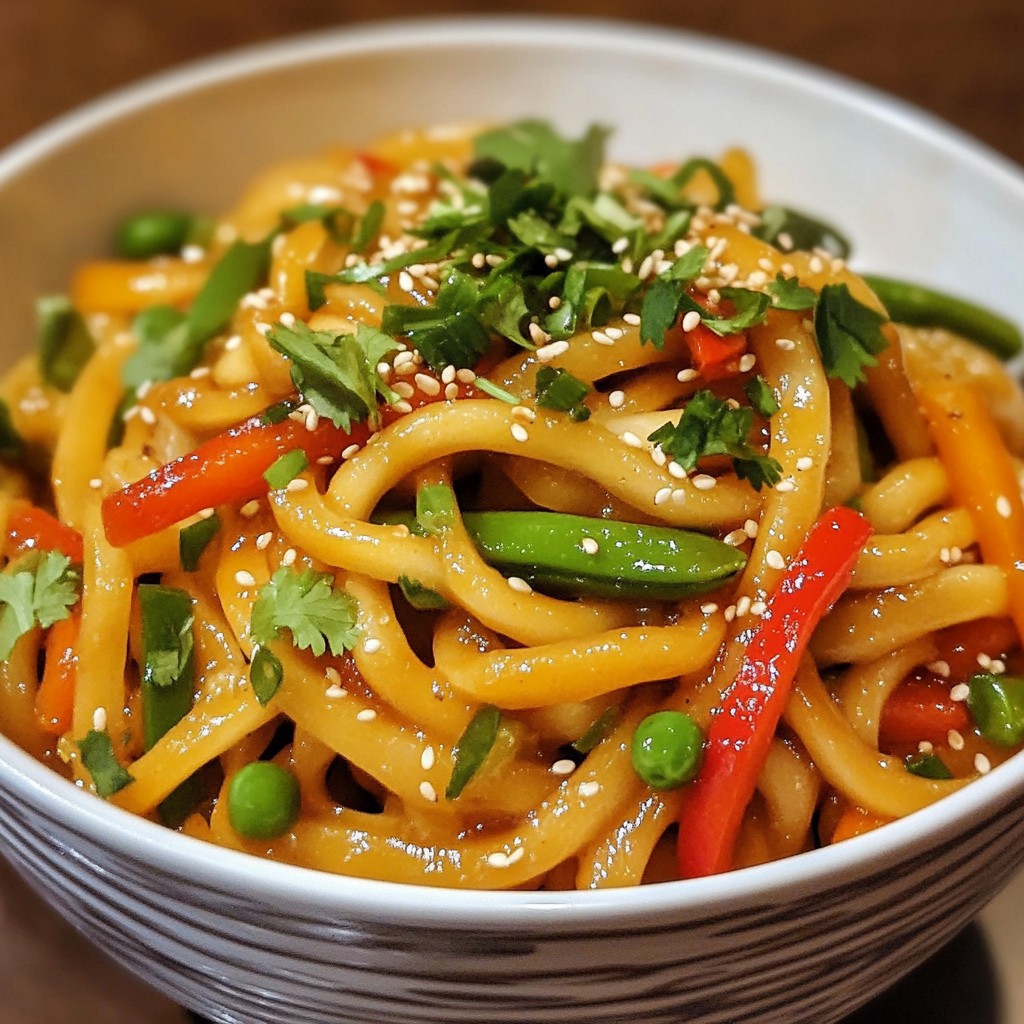
Are you ready to whip up a delicious meal fast? My savory Sesame Ginger Udon Noodles are perfect for you. This quick recipe guide takes you step-by-step through simple ingredients and easy cooking methods. You’ll soon enjoy a satisfying dish full of flavor. Let’s dive in and make your kitchen the place to be!
Why I Love This Recipe
- Quick and Easy: This recipe comes together in just 20 minutes, making it perfect for a weeknight dinner when you're short on time.
- Flavorful Sauce: The combination of soy sauce, rice vinegar, and honey or maple syrup creates a deliciously balanced sauce that complements the noodles and vegetables beautifully.
- Colorful Veggies: With vibrant snap peas, red bell pepper, and carrots, this dish is as visually appealing as it is tasty, encouraging a healthy eating experience.
- Customizable: You can easily adapt this recipe by adding your favorite proteins or using different vegetables based on what you have on hand.
Ingredients
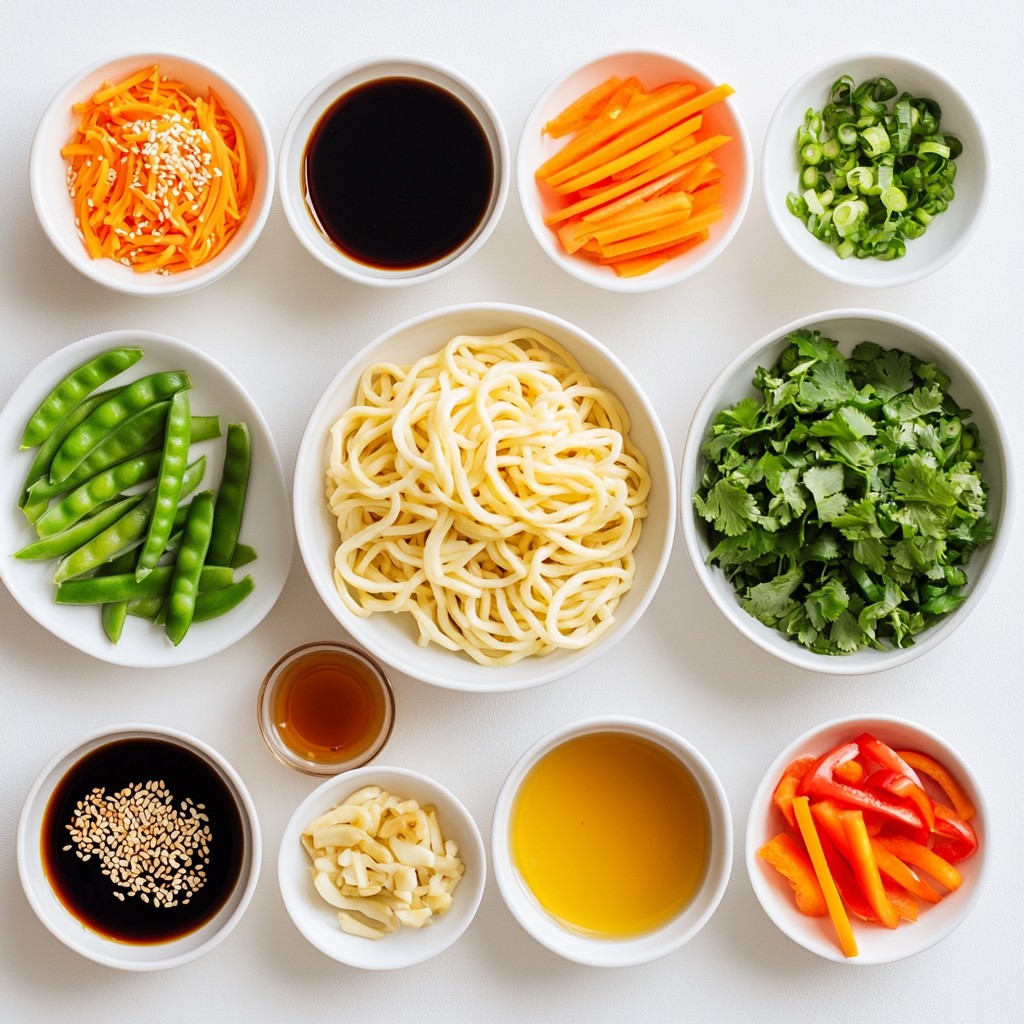
Main Ingredients for Sesame Ginger Udon Noodles
- 300g udon noodles
- 2 tablespoons sesame oil
- 1 tablespoon fresh ginger, grated
- 2 garlic cloves, minced
- 1 cup snap peas, trimmed
- 1 red bell pepper, sliced
- 2 carrots, julienned
- 3 green onions, chopped
- 3 tablespoons soy sauce
- 1 tablespoon rice vinegar
- 1 tablespoon honey or maple syrup
- 1 tablespoon sesame seeds
Udon noodles are thick, chewy, and perfect for this dish. You cook them first. Next, you want fresh ginger and garlic for a bold flavor. Snap peas, bell peppers, and carrots add color and crunch. The sauce blends soy sauce, rice vinegar, and honey or maple syrup for sweetness. Finally, sesame seeds add a nutty finish.
Optional Garnishes
- Fresh cilantro
- Additional toppings
Adding fresh cilantro brightens the dish. You can also try toppings like crushed peanuts or chili flakes for extra flavor.
Substitutions
- Noodle alternatives
- Vegetable substitutions
If you're out of udon, you can use rice noodles or even spaghetti. For veggies, feel free to swap snap peas for green beans or bell peppers for zucchini. This recipe is flexible, so have fun!
Step-by-Step Instructions
Cooking Udon Noodles
To cook udon noodles, bring a pot of water to a boil. Add the noodles and cook according to the package directions, usually about 5-7 minutes. Once they are tender but firm, drain the noodles. Rinse them under cold water to stop cooking. This step helps keep the noodles from getting mushy. Set them aside while you prepare the rest of the dish.
Preparing the Sauce
In a small bowl, mix three tablespoons of soy sauce, one tablespoon of rice vinegar, and one tablespoon of honey or maple syrup. This mix adds sweet and tangy flavors. Freshness is key here. Use high-quality soy sauce and fresh ingredients for the best taste. If possible, make the sauce right before you use it to keep it vibrant.
Stir-Frying Vegetables
Heat two tablespoons of sesame oil in a large skillet over medium heat. Add one tablespoon of freshly grated ginger and two minced garlic cloves. Sauté for about one minute until they smell great. Next, toss in one cup of snap peas, one sliced red bell pepper, and two julienned carrots. Stir-fry these for three to four minutes. The goal is to cook them until they are tender but still crisp. This gives the dish a nice texture.
Combining Ingredients
Now, pour the sauce into the skillet with the vegetables. Stir well to combine everything. Then, add the cooked udon noodles into the skillet. Toss the noodles and sauce together. Make sure every noodle gets coated with the sauce. This step is important for flavor. After everything is heated through, remove the skillet from the heat. Sprinkle sesame seeds and chopped green onions on top. Gently toss again before serving.
Tips & Tricks
Perfecting Your Udon Noodles
To cook udon noodles perfectly, follow the package instructions. Timing matters! Overcooked noodles turn mushy. Aim for about 8-10 minutes in boiling water. Once cooked, drain and rinse with cold water. This stops cooking and keeps them firm.
To enhance flavor, use a splash of sesame oil when cooking. It adds a rich, nutty taste. You can also toss in some fresh herbs. Fresh cilantro or basil works wonders!
Customizing Your Dish
You can easily add protein to your udon noodles. Chicken, shrimp, or tofu are great choices. Cook them separately, then mix them in at the end.
Seasonal veggies also add fun. Try swapping snap peas for broccoli or bell peppers for zucchini. Always choose what looks fresh at the store!
Presentation Ideas
Plating your dish can make it pop. Use a large bowl and pile the noodles high. Arrange the vegetables neatly on top for color.
For serving, sprinkle more sesame seeds and green onions. Add a lime wedge on the side for a zesty touch. This makes it look inviting and delicious!
Pro Tips
- Use Fresh Ingredients: Fresh vegetables and ginger will enhance the flavor of your udon noodles significantly. Try to use organic produce when possible for the best taste.
- Adjust the Sauce: Feel free to tweak the soy sauce, honey, or vinegar to match your personal taste. A splash of lime juice can also add a refreshing twist!
- Cook Noodles Al Dente: For the best texture, be cautious not to overcook the udon noodles. They should be tender but still have a slight bite when finished.
- Garnish Generously: Don’t skimp on the sesame seeds and fresh cilantro. These toppings not only add flavor but also elevate the dish’s presentation.
Variations
Vegan and Vegetarian Options
You can easily make this dish vegan or vegetarian. Here are some simple swaps:
- Use tofu instead of any meat.
- Replace honey with maple syrup for sweetness.
- Add more veggies like mushrooms or bok choy for extra flavor.
These changes keep the taste great while sticking to plant-based diets.
Spicy Sesame Ginger Udon
If you like heat, try adding spices! Here are some ways to spice up your udon:
- Add red pepper flakes for a kick.
- Use sriracha or chili paste in the sauce.
- Mix in fresh chopped chili peppers.
This will give your dish a bold flavor and make it exciting.
Cold Udon Noodle Salad
Serving udon cold can be a fun twist. Here’s how to do it:
- After cooking, rinse the noodles well in cold water.
- Toss them with a dressing made from soy sauce, rice vinegar, and sesame oil.
- Chill the noodles in the fridge for about 30 minutes.
This makes a refreshing salad perfect for warm days!
Storage Info
Storing Leftovers
To keep your sesame ginger udon noodles fresh, store them in the fridge. Use an airtight container to prevent moisture loss. Place the noodles and vegetables together if you plan to eat them soon. They will stay tasty for about 3 days. If you wait longer, the flavor and texture may change.
Reheating Instructions
When it's time to eat your leftovers, you can use a few methods to reheat udon noodles. The best way is to heat them in a pan over low heat. Add a splash of water or sauce to keep them moist. Stir often to avoid sticking. You can also use a microwave. Place the noodles in a bowl with a little water, cover, and heat for about 1-2 minutes. This will help keep their soft texture.
Freezing Udon Noodles
If you have extra noodles, you can freeze them for later. First, cook the noodles and let them cool completely. Place them in a freezer-safe bag or container. Remove as much air as possible to avoid freezer burn. They can last up to 2 months in the freezer. When you are ready to eat, take them out and thaw in the fridge overnight. Reheat as mentioned above for the best results.
FAQs
What are udon noodles?
Udon noodles are thick, chewy Japanese noodles made from wheat flour. They are often white and have a smooth texture. Udon noodles are commonly used in soups and stir-fries. Their hearty structure makes them perfect for soaking up sauces, like the savory sesame ginger sauce in this recipe.
Can I make Sesame Ginger Udon Noodles gluten-free?
Yes, you can! Look for gluten-free udon noodles made from rice or other gluten-free grains. Ensure that your soy sauce is gluten-free as well. For the sauce, use tamari instead of regular soy sauce. This simple swap keeps the flavor while making it gluten-free.
How do I make the dish spicier?
To add heat, consider using crushed red pepper flakes or sliced jalapeños. You can also add a splash of sriracha to the sauce for a spicy kick. Don't be shy; spice levels can vary based on personal taste. Adjust the amount to suit your preference.
How long do leftovers last?
Leftovers can last in the fridge for about three days. Store them in an airtight container to keep them fresh. Check for any off smells or changes in color. If you notice these signs, it’s best to discard the noodles.
Sesame Ginger Udon Noodles are simple and fun to make. We covered the key ingredients, cooking steps, and helpful tips. You can customize this dish with various vegetables and sauces. Remember to try different noodles and add your favorite proteins. Don't forget about storing leftovers and reheating them properly. Enjoy exploring the many variations, like cold salads or spicy versions. This dish is sure to please everyone at your table. Get cooking and savor each bite!