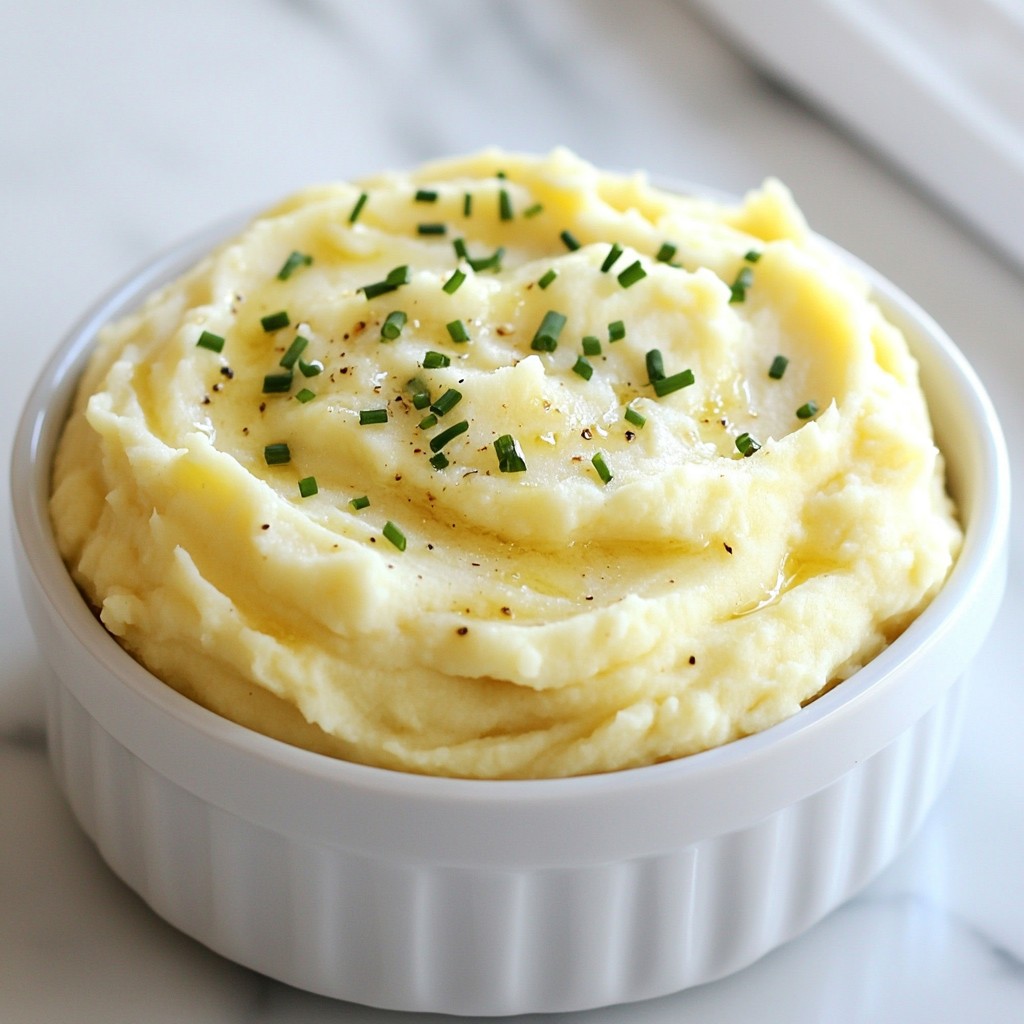
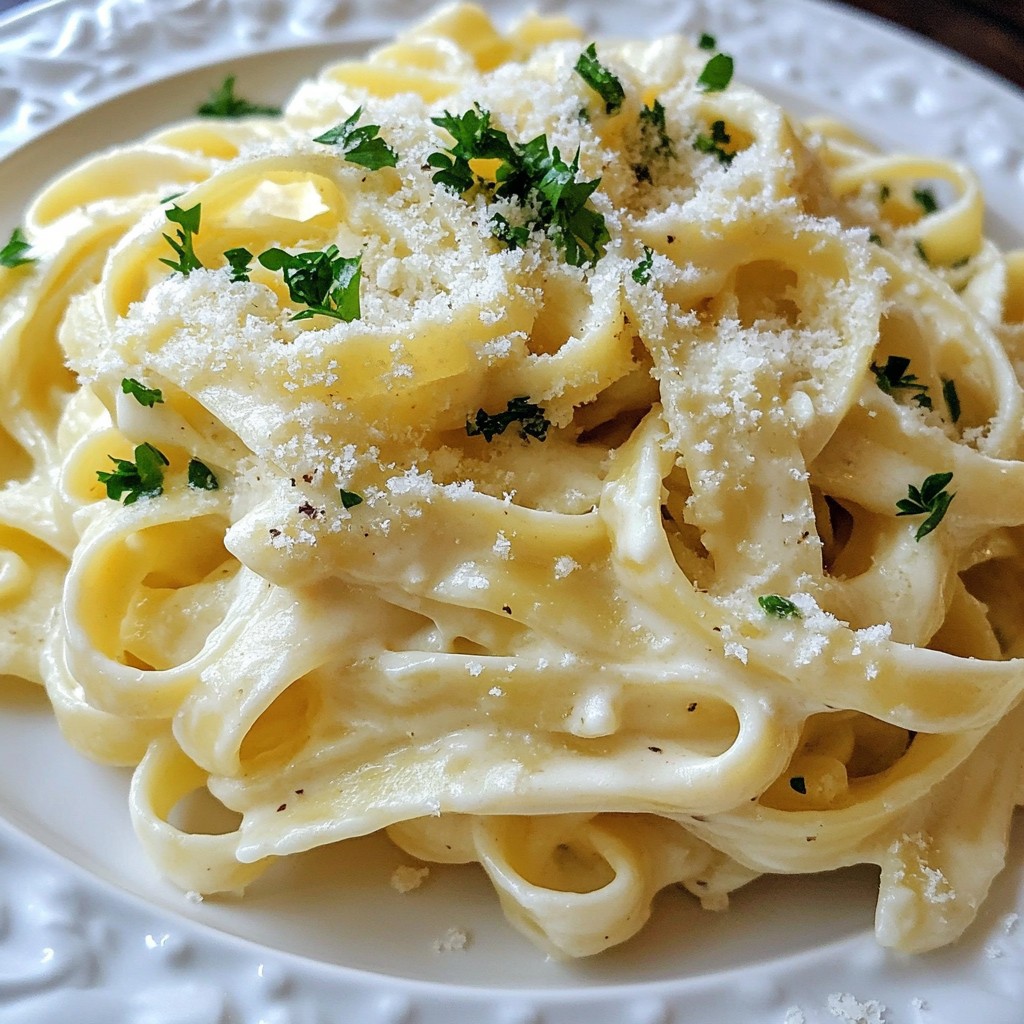
Looking for a delicious twist on your classic Alfredo sauce? You’re in the right place! This Creamy Cauliflower Alfredo is simple, tasty, and packed with nutrients. I'll guide you step-by-step to create a rich and creamy pasta dish that's perfect for any meal. You don't need to be a chef to impress your family with this healthy favorite. Let's dive into the ingredients and get cooking!
Why I Love This Recipe
- Healthy Alternative: This creamy cauliflower Alfredo sauce is a lighter option compared to traditional Alfredo, packed with nutrients and flavor.
- Vegan-Friendly: With the option to use almond milk and nutritional yeast, this dish can easily be made vegan without sacrificing taste.
- Quick and Easy: Ready in just 30 minutes, this recipe is perfect for a weeknight dinner when you're short on time.
- Crowd-Pleaser: Whether you're serving family or guests, this creamy pasta dish is sure to impress and satisfy everyone.
Ingredients
List of Ingredients
- Cauliflower and Other Veggies
- 1 medium head of cauliflower, chopped into florets
- 3 cloves garlic, minced
- Dairy and Dairy Alternatives
- 1 cup whole milk or unsweetened almond milk
- 1/4 cup nutritional yeast
- 1/4 cup grated Parmesan cheese (or a vegan alternative)
- Seasonings and Garnishes
- 1/4 teaspoon nutmeg
- Salt and pepper to taste
- 1 tablespoon olive oil
- Fresh parsley, chopped (for garnish)
- 8 ounces fettuccine pasta (or any pasta of choice)
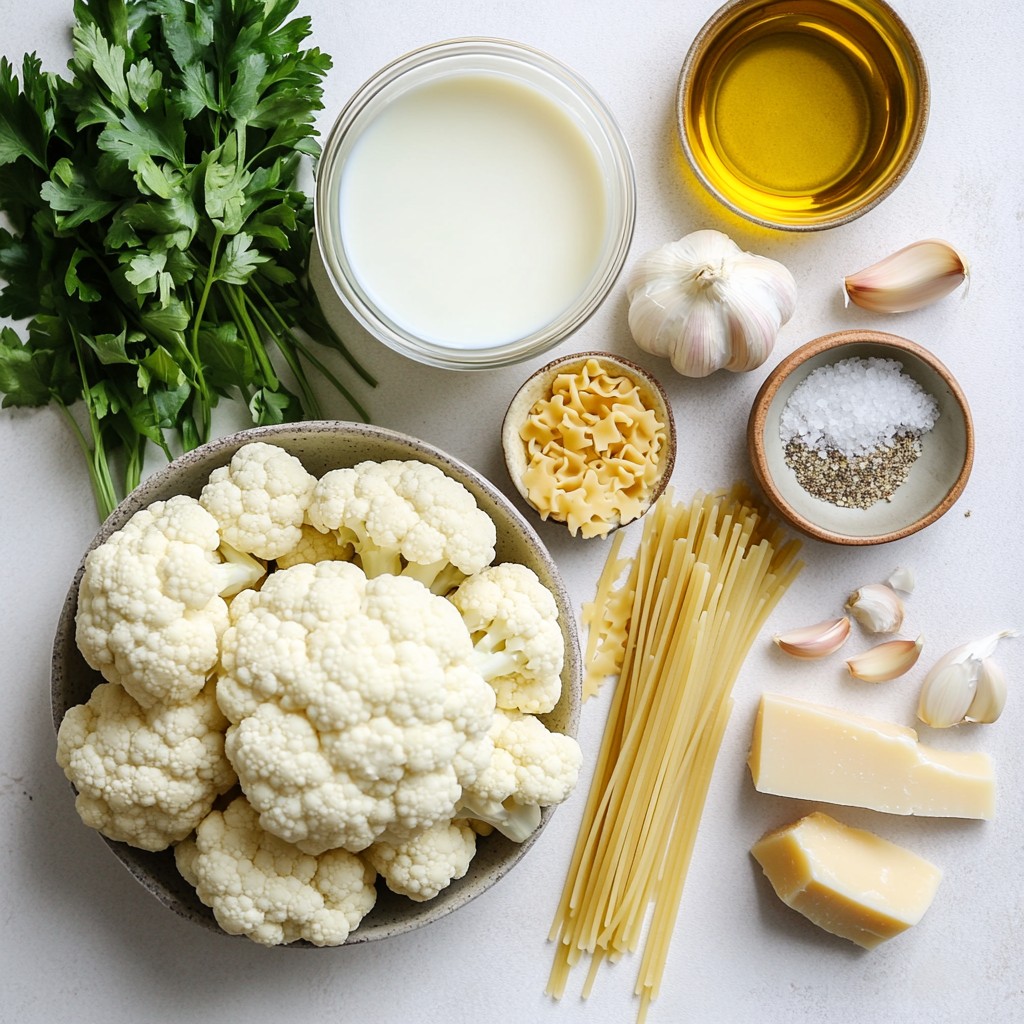
The star of this dish is the cauliflower. It gives the sauce a creamy texture. The garlic adds a lovely aroma. You can use whole milk for richness or almond milk for a lighter choice. Nutritional yeast brings a cheesy flavor, while Parmesan adds depth.
Don't forget the nutmeg! It adds warmth to the sauce. Salt and pepper balance all the flavors. Olive oil helps sauté the garlic just right. Fresh parsley makes a beautiful garnish. Use any pasta you like, but fettuccine is classic for this dish.
Step-by-Step Instructions
Cooking the Cauliflower
1. Boiling Process: Start by bringing 2 cups of vegetable stock to a boil in a large pot. Add in your chopped cauliflower florets. Cook them for 10 to 12 minutes. You want the florets to become soft and tender for the best texture.
2. Checking for Tenderness: Use a fork to poke a piece of cauliflower. If it easily breaks apart, it is ready. If not, let it boil a few more minutes.
Sautéing the Garlic
1. Choosing the Right Pan: Use a medium-size pan that heats evenly. This helps to cook the garlic just right without burning it.
2. Tips for Perfectly Cooked Garlic: Heat 1 tablespoon of olive oil over medium heat. Add 3 minced garlic cloves. Stir often for 1 to 2 minutes. The garlic should smell great but not turn brown.
Blending the Sauce
1. Achieving the Right Consistency: After cooking, drain the cauliflower. Add it to your blender with the sautéed garlic, 1 cup of whole milk (or almond milk), 1/4 cup of nutritional yeast, and 1/4 cup of grated Parmesan cheese.
2. Adding Nutritional Elements: Add 1/4 teaspoon of nutmeg, and season with salt and pepper to taste. Blend until smooth and creamy. If the sauce is too thick, add more milk until it is just right.
Cooking the Pasta
1. Recommended Pasta Types: I suggest using 8 ounces of fettuccine pasta, but feel free to choose any pasta you like.
2. Timing Tips: Cook the pasta according to the package instructions. Reserve about 1/2 cup of the pasta water before draining. This water will help mix the sauce later.
Combining Everything
1. Tossing the Pasta and Sauce: In the pot you used for the pasta, pour in the creamy cauliflower sauce. If the sauce seems thick, slowly stir in the reserved pasta water until you reach your desired creaminess.
2. Final Seasoning Adjustments: Add the cooked pasta to the sauce and toss well. Taste and adjust with more salt and pepper if needed. Serve hot and enjoy your dish!
Tips & Tricks
Achieving the Perfect Creaminess
Adjusting Milk Quantities To get the best creaminess, start with one cup of milk. If your sauce seems too thick, slowly add more milk. Blend it until smooth. You want a nice, velvety texture.
Thinning the Sauce If the sauce gets too thick after cooking, use reserved pasta water. Add a little at a time. Stir well until you find the right creaminess.
Flavor Enhancements
Suggested Adding Ingredients Try adding some sautéed mushrooms or spinach. These ingredients add great taste and nutrition. You can also mix in sun-dried tomatoes for a tangy kick.
How to Infuse More Flavor In addition to salt and pepper, add herbs like basil or oregano. A squeeze of lemon juice brightens the flavors too. Experiment with spices like paprika for a little heat.
Common Mistakes to Avoid
Overcooking Cauliflower Be careful not to overcook the cauliflower. Cook it until it's tender but not mushy. This keeps the flavor and texture just right.
Burning Garlic Watch the garlic closely while cooking. It can burn quickly. If it turns brown, throw it away and start over. Burnt garlic gives a bitter taste to your sauce.
Pro Tips
- Choose Fresh Cauliflower: When selecting cauliflower, look for firm, compact heads with tight florets and vibrant green leaves for the best flavor and texture.
- Adjusting Creaminess: If you prefer a thicker sauce, reduce the amount of milk or use less reserved pasta water. For a thinner sauce, gradually add more milk or pasta water until you reach your desired consistency.
- Enhance Flavor: Consider adding a splash of lemon juice or a pinch of red pepper flakes to the sauce for a zesty kick that complements the creamy cauliflower flavor.
- Make it Vegan: To keep this recipe vegan, ensure to use plant-based milk and nutritional yeast instead of Parmesan cheese, or simply omit it for a lighter version.
Variations
Vegan and Dairy-Free Alternatives
You can easily make this dish vegan. For Parmesan cheese, I suggest using nutritional yeast. It adds a cheesy flavor without dairy. For milk, unsweetened almond milk works great. You can also use oat milk or soy milk if you prefer. These options keep the dish creamy and delicious.
Gluten-Free Options
If you need gluten-free pasta, look for brown rice or quinoa pasta. Both taste great in this dish. You can also try lentil or chickpea pasta. They add extra protein and fiber, making your meal more filling.
Different Flavor Profiles
To add more flavor, consider using herbs and spices. Fresh basil or thyme can enhance the taste. You can also sprinkle some red pepper flakes for heat. Adding other vegetables like spinach or mushrooms can create a unique twist. You can mix in cooked broccoli or peas for extra nutrients. These variations keep the dish exciting every time you make it.
Storage Info
How to Store Leftovers
Store leftovers in airtight containers. Glass or plastic containers work well. Make sure they are sealed tightly. This helps keep the dish fresh. Allow the dish to cool before storing. The best way to store Creamy Cauliflower Alfredo is in the fridge. It can last up to three days.
Reheating Instructions
You can reheat your leftovers in two ways: stovetop or microwave.
- Stovetop: Pour the pasta into a pan. Add a splash of water or milk. Heat on low, stirring gently until warm. This keeps the sauce creamy.
- Microwave: Place the pasta in a microwave-safe bowl. Add a little milk to help it heat evenly. Cover the bowl with a lid or plastic wrap. Heat in short bursts, stirring in between.
Freezing Tips
You can freeze the sauce for later use. First, let it cool completely. Then, transfer it to freezer-safe bags or containers. Remove as much air as possible. This prevents freezer burn. You can store it for up to three months. When ready to use, thaw it in the fridge overnight. Reheat it slowly on the stovetop, adding a bit of milk to restore creaminess.
FAQs
How can I make this dish lower in calories?
You can reduce calories in Creamy Cauliflower Alfredo by making smart swaps. Here are some tips:
- Use low-fat milk instead of whole milk. This cuts down on fat.
- Skip the cheese or use less. Nutritional yeast adds flavor without many calories.
- Choose whole grain pasta. It has more fiber and keeps you full longer.
- Add more veggies. Mix in spinach or zucchini for more nutrients without many calories.
These changes keep the dish tasty while lowering calories.
Can I use frozen cauliflower?
Yes, you can use frozen cauliflower! Here’s how to cook it:
1. Skip boiling the vegetable stock. Instead, add frozen florets directly to boiling water.
2. Cook for about 5-7 minutes until tender. Frozen florets cook faster than fresh ones.
3. Drain and blend just like fresh cauliflower. The rest of the steps stay the same.
Using frozen cauliflower saves prep time and still yields a creamy sauce.
How long does Creamy Cauliflower Alfredo last in the fridge?
Creamy Cauliflower Alfredo stays fresh for about 3-5 days in the fridge. Follow these storage tips:
- Use an airtight container to keep it from drying out.
- Let it cool before sealing. This helps avoid moisture buildup.
- Label the container with the date. This helps you track its freshness.
Reheat it gently on the stove or microwave when you're ready to enjoy again.
This post covers how to make a tasty Creamy Cauliflower Alfredo. We discussed the best ingredients, with fresh veggies and good seasonings. The step-by-step guide shows how to cook cauliflower, sauté garlic, blend the sauce, and toss everything together. I shared tips for creaminess and flavor, plus common mistakes to avoid.
In the end, whether you enjoy dairy, prefer vegan options, or have dietary needs, this dish can fit your taste. So, get cooking, and enjoy a healthy meal that’s easy to make!