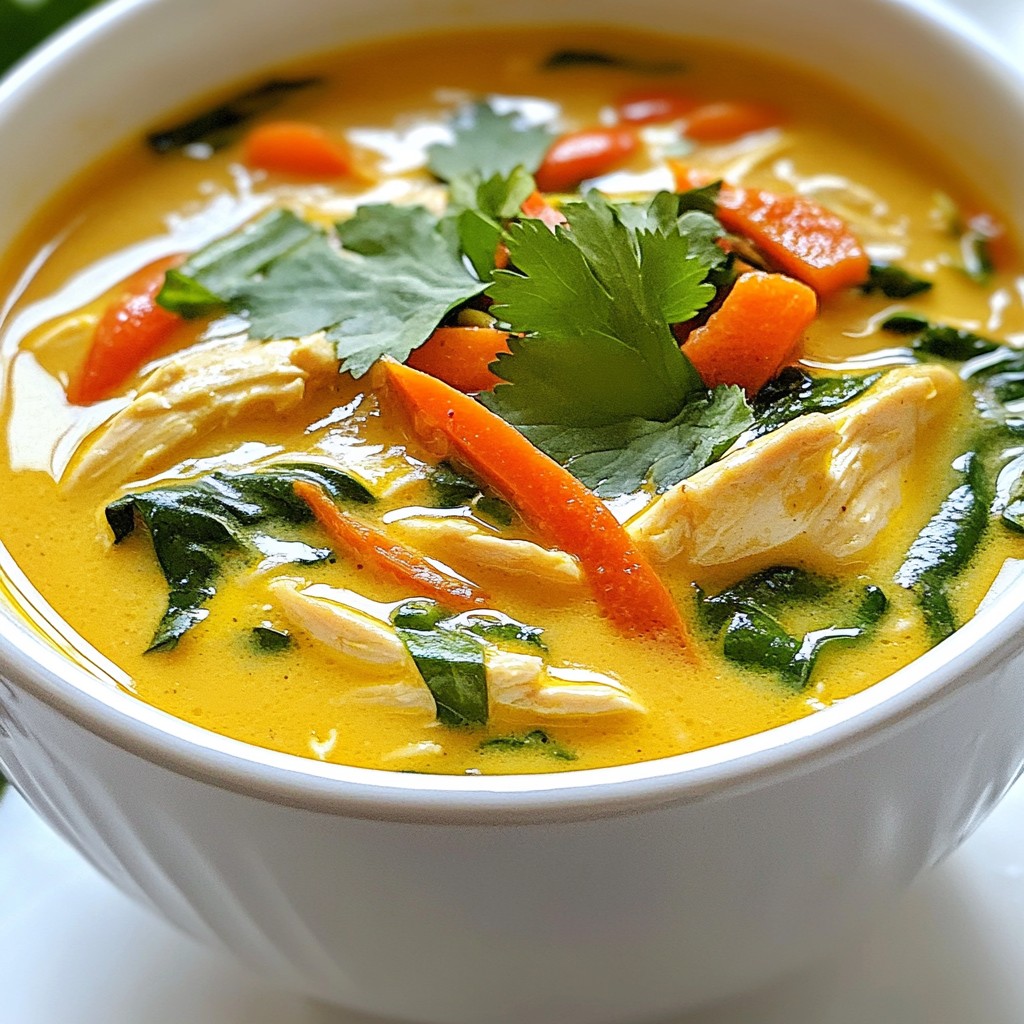
Welcome to the world of Coconut Curry Chicken Soup, where each spoonful offers warmth and comfort. This dish is simple yet bursting with flavor. Whether you're a busy parent or a culinary beginner, I’ll guide you through easy steps and tips. You’ll learn about fresh ingredients, cooking methods, and ways to tweak the recipe to suit your taste. Let’s dive into a bowl of happiness!
Why I Love This Recipe
- Deliciously Creamy: This soup features rich coconut milk, creating a wonderfully creamy texture that complements the spices perfectly.
- Quick and Easy: With a prep time of just 15 minutes, this recipe is perfect for busy weeknights without sacrificing flavor.
- Flavor-Packed: The combination of red curry paste, ginger, and garlic infuses the soup with vibrant, aromatic flavors that will warm your soul.
- Versatile Ingredients: This recipe allows for substitutions and additions, so you can tailor it to your taste preferences or what you have on hand.
Ingredients
List of All Ingredients
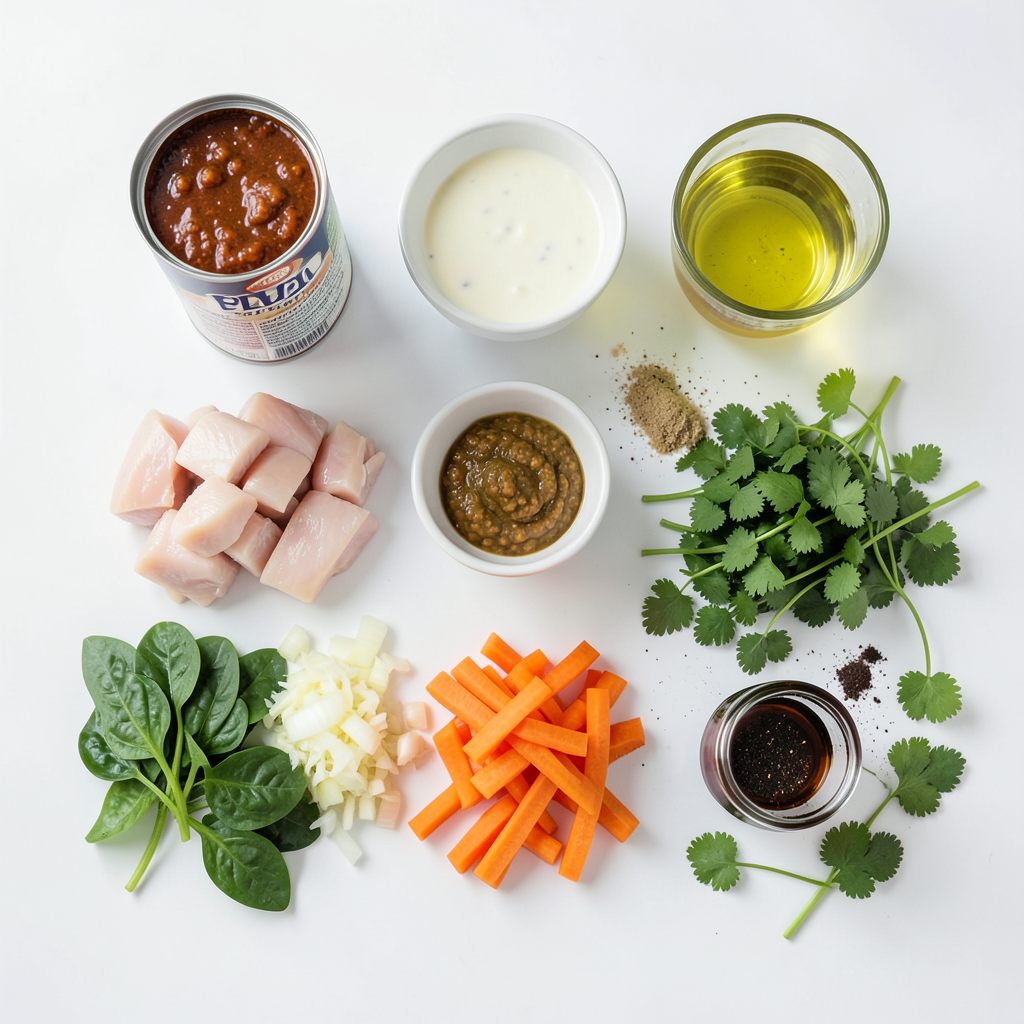
To make this soup, gather these fresh ingredients:
- 1 lb boneless chicken thighs, cut into bite-sized pieces
- 1 can coconut milk (400ml)
- 2 tablespoons red curry paste
- 4 cups low sodium chicken broth
- 1 tablespoon olive oil
- 1 medium onion, chopped
- 3 cloves garlic, minced
- 1 inch piece of ginger, grated
- 2 medium carrots, sliced
- 1 bell pepper (red or yellow), chopped
- 1 cup baby spinach
- 2 tablespoons fish sauce
- 1 tablespoon lime juice
- Fresh cilantro, chopped (for garnish)
- Salt and pepper to taste
Ingredient Substitutions
You can change some ingredients to suit your taste or needs:
- Chicken thighs can be swapped with chicken breast for a leaner option.
- Coconut milk can be replaced with almond milk for a lighter broth.
- Red curry paste can be exchanged for green curry paste if you prefer a different flavor.
- Fish sauce can be omitted for a vegetarian version or replaced with soy sauce.
- If you don't like spinach, kale or Swiss chard are great alternatives.
Tips for Choosing Fresh Ingredients
Fresh ingredients make your soup taste better. Here are some tips:
- For chicken, look for bright pink, firm pieces with no odor.
- Choose coconut milk that is creamy and free of lumps.
- Select onions that are firm and have a smooth skin.
- Garlic should be dry and free from sprouts.
- Carrots should be crisp and bright orange for the best flavor.
- Bell peppers should feel heavy with smooth skin.
- Look for spinach that is vibrant green and free from wilting.
Step-by-Step Instructions
Preparation Steps
1. Start by gathering all your ingredients. This makes cooking easy.
2. Cut the chicken thighs into bite-sized pieces. This helps them cook quickly.
3. Chop the onion, slice the carrots, and chop the bell pepper.
4. Mince the garlic and grate the ginger. Fresh flavors matter!
5. Measure out the coconut milk, chicken broth, and other ingredients.
Cooking Tips for Each Stage
- Heating the Oil: Use medium heat to avoid burning the oil. This keeps the flavors fresh.
- Sautéing the Onion: Cook until it turns translucent. This takes about 5 minutes.
- Adding Garlic and Ginger: Stir for just a minute. You want to smell the aroma!
- Cooking the Chicken: Brown the chicken for 5-7 minutes. This adds depth to the soup.
- Combining Ingredients: Pour in the coconut milk and broth gently. Stir well to mix.
- Simmering: Lower the heat and let it simmer for 20 minutes. This helps the flavors blend beautifully.
- Finishing Touches: Add spinach last. It cooks quickly and keeps its bright green color.
How to Know When It’s Ready
- Check that the chicken is no longer pink inside. It should be fully cooked.
- The carrots and bell pepper should be tender but still firm.
- Taste for seasoning. Adjust salt and pepper if needed.
- When the spinach wilts, your soup is ready to serve.
Enjoy your delicious Coconut Curry Chicken Soup!
Tips & Tricks
Flavor Enhancements
To make your soup burst with flavor, focus on fresh ingredients. Use fresh ginger and garlic, as they add a strong taste. You can also experiment with spices. Add a pinch of turmeric or cumin for depth. For a sweeter touch, toss in a small amount of brown sugar. This balance can elevate your dish.
Common Mistakes to Avoid
One common mistake is cooking the chicken too long. Overcooked chicken can become tough. Make sure to cook it just until it’s no longer pink. Another mistake is not seasoning enough. Taste your soup as it cooks. Adjust salt and pepper to fit your taste. Lastly, don’t skip the lime juice. It brightens the flavor and adds freshness.
Serving Suggestions
Serve the soup hot in bowls. Top with fresh cilantro for a pop of color. You can also add lime wedges on the side. This gives your guests a chance to add more zing. Consider pairing the soup with steamed rice or crusty bread. These sides soak up the delicious broth and make the meal heartier.
Pro Tips
- Use Fresh Ingredients: Fresh produce and herbs enhance the flavor of your soup, making it more vibrant and delicious.
- Adjust Spice Level: If you prefer a milder soup, reduce the amount of red curry paste or add it gradually to control the heat.
- Thicken the Soup: For a creamier texture, you can blend a portion of the soup and return it to the pot.
- Garnish for Flavor: Don't skip the fresh cilantro at the end; it adds a burst of freshness and flavor to the dish.
Variations
Vegetarian Version of Coconut Curry Chicken Soup
To make a vegetarian version, swap the chicken for tofu or chickpeas. Tofu adds protein and absorbs all the flavors well. Use firm tofu, cut into cubes. You can also add more veggies like zucchini, mushrooms, or sweet potatoes. These will add texture and nutrition. Keep the coconut milk, curry paste, and spices. They give the soup its rich taste.
Spice Level Adjustments
If you love heat, add more curry paste or fresh chili peppers. Start with a small amount and taste as you go. For a milder soup, reduce the red curry paste. You can also add coconut sugar to balance the heat. This will give a nice sweet touch to your soup.
Alternative Protein Options
Besides chicken, you can use shrimp or fish. Cook shrimp just until pink, so they stay tender. White fish like cod or tilapia works well too. Just add them in when the soup is almost done cooking. This way, they won’t overcook. These options add unique flavors and textures to your soup.
Storage Info
How to Store Leftovers
To store leftover coconut curry chicken soup, wait for it to cool. Use an airtight container to keep it fresh. Place the soup in the fridge for up to three days. This way, the flavors stay intact, and it’s ready to enjoy later.
Freezing Tips for Coconut Curry Chicken Soup
If you want to save the soup for later, freezing is a great option. Let the soup cool completely before freezing. Use freezer-safe containers or bags. It can last for up to three months in the freezer. When ready to eat, thaw it in the fridge overnight.
Reheating Instructions
To reheat the soup, pour it into a pot over medium heat. Stir it often to prevent burning. You can also use the microwave. Heat it in a microwave-safe bowl and cover it to keep moisture in. Heat for one to two minutes, checking halfway through. Enjoy the comforting flavors again!
FAQs
What can I substitute for chicken in the soup?
You can use tofu or chickpeas instead of chicken. Both options add protein and texture. Tofu absorbs flavors well. Chickpeas provide a nice bite. Keep the cooking time the same for best results.
Can I make this soup dairy-free?
Yes, this soup is already dairy-free! The coconut milk gives it a creamy texture. It has no dairy products at all. You can enjoy this dish without any worries about dairy.
How long does Coconut Curry Chicken Soup last in the fridge?
This soup lasts about three to four days in the fridge. Make sure to store it in an airtight container. When you want to eat it again, just reheat it. The flavors will still be great!
In this post, we covered the key ingredients for Coconut Curry Chicken Soup, with tips for fresh choices and substitutions. I shared step-by-step cooking instructions and important tips to avoid common mistakes. We explored variations, including vegetarian options and spice adjustments, and discussed proper storage for leftovers.
Remember, cooking is fun. Don’t be afraid to experiment with flavors. Happy cooking!